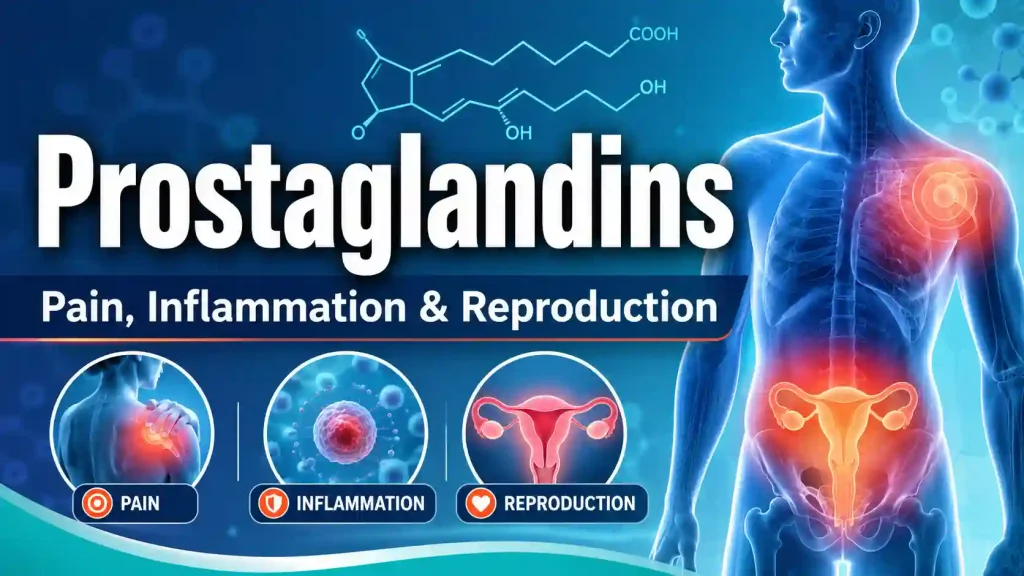
Prostaglandins are natural chemical substances made by the body. They work a little like hormones, but they usually act close to the place where they are produced instead of traveling long distances through the bloodstream.
They may be small, but they have a big impact on the body. Prostaglandins are involved in pain, inflammation, fever, blood flow, blood clotting, stomach protection, kidney function, menstruation, pregnancy, and childbirth.
What Are Prostaglandins?
Prostaglandins are fatty acid-based compounds that are produced in many tissues of the body. They are mainly made from a fatty acid called arachidonic acid, which is found in cell membranes.
Whenever the body is injured, stressed, infected, or needs to respond to a certain situation, prostaglandins may be produced. Their effect depends on where they are made and which type of prostaglandin is involved.
Why Are They Important?
Prostaglandins are important because they help the body respond to changes. For example, when you get hurt, they help create inflammation so the body can begin healing. When you have an infection, they can contribute to fever. During menstruation, they help the uterus contract.
In simple words, prostaglandins help the body react, protect itself, and maintain balance.
Formation of Prostaglandins
Prostaglandins are not stored in large amounts in the body. Instead, they are made when the body needs them.
Role of Arachidonic Acid
The process begins with arachidonic acid. This fatty acid is present in the outer covering of cells, known as the cell membrane. When a cell is damaged or activated, arachidonic acid is released.
Once released, it becomes the starting material for prostaglandin production.
Role of COX Enzymes
After arachidonic acid is released, enzymes called cyclooxygenase enzymes, or COX enzymes, help convert it into prostaglandins.
There are two main COX enzymes: COX-1 and COX-2.
COX-1
COX-1 is usually present in the body all the time. It helps make prostaglandins that support normal functions, such as protecting the stomach lining, helping the kidneys work properly, and supporting blood clotting.
COX-2
COX-2 is mainly produced during injury, infection, or inflammation. It helps make prostaglandins that are linked with pain, swelling, and fever.
This is why many pain-relieving medicines work by blocking COX enzymes.
Types of Prostaglandins
There are different types of prostaglandins, and each one has its own role. Some help with healing and protection, while others are involved in pain, fever, or contractions.
Prostaglandin E2
Prostaglandin E2, also called PGE2, is one of the most well-known prostaglandins. It is involved in inflammation, pain, fever, and uterine contractions. It also helps protect the stomach lining.
Prostaglandin F2 Alpha
Prostaglandin F2 alpha, also known as PGF2α, plays an important role in the reproductive system. It helps the uterus contract during menstruation and childbirth.
Prostaglandin I2
Prostaglandin I2, also called prostacyclin, helps relax blood vessels and prevents platelets from sticking together too much. This helps maintain healthy blood flow.
Thromboxane A2
Thromboxane A2 is closely related to prostaglandins. It helps blood vessels become narrower and supports blood clot formation by helping platelets stick together.
Functions of Prostaglandins
Prostaglandins affect many body systems. Their function depends on the type of prostaglandin and the part of the body where they are produced.
Role in Inflammation
Inflammation is one of the body’s natural defense responses. When an area is injured or infected, prostaglandins help increase blood flow to that area.
This can cause redness, warmth, swelling, and pain. Although inflammation can feel uncomfortable, it is often part of the healing process.
Role in Pain
Prostaglandins can make nerve endings more sensitive. This means that the painful area may feel more tender or sore than usual.
For example, when you sprain an ankle or have menstrual cramps, prostaglandins may be one reason the pain feels stronger.
Role in Fever
When the body is fighting an infection, prostaglandins can act in the brain and raise the body’s temperature set point. This leads to fever.
Fever is not always harmful. In many cases, it is part of the body’s way of fighting infection.
Role in Blood Clotting
Prostaglandins help maintain a balance in blood clotting. Some substances, such as thromboxane A2, encourage platelets to stick together and form clots. Others, such as prostacyclin, help prevent too much clotting.
This balance is important because the body needs clotting to stop bleeding, but too much clotting can be dangerous.
Role in Stomach Protection
Some prostaglandins help protect the stomach lining. They increase mucus and bicarbonate production, which helps defend the stomach from acid.
This is why long-term use of some painkillers may sometimes cause stomach irritation or ulcers. These medicines can reduce protective prostaglandins.
Role in Kidney Function
Prostaglandins help regulate blood flow in the kidneys. This is especially important when the body is under stress, such as during dehydration, low blood pressure, or illness.
Role in Reproduction
Prostaglandins are very important in the reproductive system. They help with ovulation, menstruation, cervical ripening, labor, and childbirth.
Prostaglandins and Menstruation
Many people hear about prostaglandins because of menstrual cramps. During menstruation, the uterus produces prostaglandins to help it contract and shed its lining.
Menstrual Cramps
When prostaglandin levels are high, the uterus may contract more strongly. These stronger contractions can reduce blood flow to the uterine muscles and cause pain.
This is why some people experience mild cramps, while others may have severe menstrual pain.
Other Menstrual Symptoms
High prostaglandin levels may also contribute to symptoms such as nausea, vomiting, diarrhea, headache, and tiredness during periods.
Pain Relief During Periods
Medicines such as ibuprofen and naproxen can reduce prostaglandin production. This is why they are often helpful for menstrual cramps.
However, these medicines should be used carefully, especially by people with stomach, kidney, or bleeding problems.
Prostaglandins and Pregnancy
Prostaglandins play a major role during pregnancy and childbirth. They help prepare the body for labor and support uterine contractions.
Cervical Ripening
Before delivery, the cervix needs to soften, thin, and open. Prostaglandins help with this process, which is known as cervical ripening.
Labor Contractions
Prostaglandins help the uterus contract during labor. These contractions help push the baby through the birth canal.
Medical Use in Labor
Doctors may use synthetic prostaglandins to help induce labor when it is medically necessary. This is done under medical supervision to make sure it is safe for both the mother and baby.
Prostaglandins and Medicines
Prostaglandins are closely connected with many common medicines. Some medicines reduce prostaglandin production, while others act like prostaglandins in the body.
NSAIDs
NSAIDs, or non-steroidal anti-inflammatory drugs, are medicines that reduce pain, fever, and inflammation. Common examples include aspirin, ibuprofen, and naproxen.
They work by blocking COX enzymes, which lowers prostaglandin production.
Why NSAIDs Reduce Pain
When fewer prostaglandins are made, nerve endings become less sensitive, inflammation decreases, and fever may come down. This is why NSAIDs are useful for headaches, muscle pain, joint pain, fever, and menstrual cramps.
Side Effects of NSAIDs
Because prostaglandins also protect the stomach and support kidney blood flow, reducing them too much can sometimes cause side effects.
Possible side effects include stomach irritation, ulcers, bleeding, kidney problems, or increased risk in certain heart conditions. This is why NSAIDs should not be overused.
Synthetic Prostaglandins
Synthetic prostaglandins are used in medicine for different purposes. They may be used to induce labor, treat glaucoma, protect the stomach, or help manage certain heart conditions in newborns.
Effects of Excess Prostaglandins
Too many prostaglandins can make some symptoms worse, especially when the body is inflamed or under stress.
Increased Pain
High prostaglandin levels can make nerves more sensitive, which may increase pain.
Swelling and Redness
Excess prostaglandins can increase blood flow and inflammation, causing swelling, redness, and warmth in the affected area.
Severe Menstrual Cramps
During periods, high prostaglandin levels can cause strong uterine contractions. This may lead to severe cramps and discomfort.
Fever
More prostaglandin activity in the brain can contribute to a rise in body temperature during infection.
Effects of Low Prostaglandins
Low prostaglandin levels can also create problems because some prostaglandins have protective roles.
Stomach Irritation
When protective prostaglandins are reduced, the stomach lining may become more vulnerable to acid. This can increase the risk of gastritis, ulcers, or bleeding.
Kidney Stress
Low prostaglandin levels may reduce blood flow to the kidneys, especially in people who are dehydrated, elderly, or already have kidney disease.
Reduced Protective Functions
Since prostaglandins help maintain balance in several organs, very low levels can interfere with normal body protection and regulation.
Clinical Importance of Prostaglandins
Prostaglandins are important in medicine because they are linked with many common health conditions and treatments.
Importance in Diagnosis
Symptoms such as pain, swelling, fever, and menstrual cramps often involve prostaglandins. Understanding their role helps doctors choose suitable treatments.
Importance in Treatment
Many medicines either block prostaglandin production or copy the action of prostaglandins. This makes them useful in pain relief, reproductive medicine, eye care, stomach protection, and heart-related treatment in newborns.
Conclusion
Prostaglandins are small but powerful substances that help the body respond to injury, infection, stress, and reproductive changes. They are involved in pain, inflammation, fever, blood clotting, stomach protection, kidney function, menstruation, pregnancy, and childbirth.
Although prostaglandins are essential for normal body function, too much or too little of them can cause problems. That is why they are important in both health and disease. Understanding prostaglandins also helps us understand how many common medicines work, especially painkillers and anti-inflammatory drugs.

## 🩺 RxZest Medical Team
The **RxZest Medical Team** is dedicated to providing accurate, reliable, and easy-to-understand health information. Our team includes healthcare writers, medical researchers, and pharmacology specialists who simplify complex medical topics into clear, practical guidance.
All content is based on trusted medical sources and carefully reviewed for accuracy and safety. We focus on medicine-related topics such as uses, dosage, side effects, and precautions, ensuring information is helpful and up to date.
Our goal is to make health information accessible to everyone. Content is for educational purposes only and does not replace professional medical advice.