If you have ever received a prescription from a doctor, you may have noticed abbreviations such as OD, BD, TDS, or PRN written next to your medication instructions. These abbreviations are commonly used in healthcare to communicate how and when medicines should be taken.
One of the most common medical abbreviations is BD.
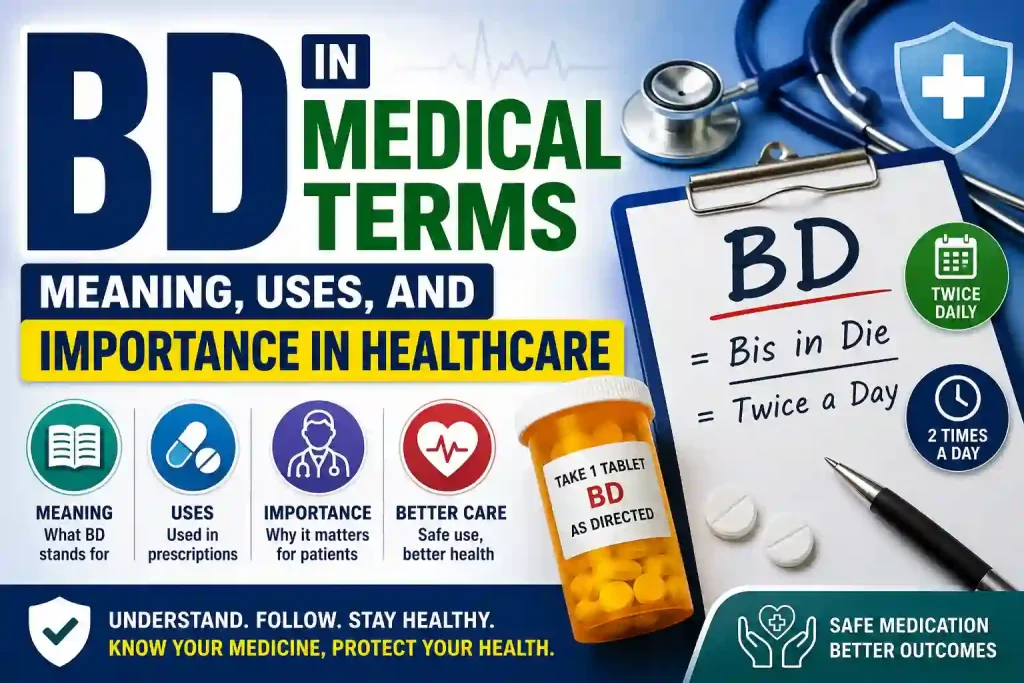
In medical terminology, BD stands for “Bis in Die,” a Latin phrase that means “twice a day” or “twice daily.” When a healthcare professional writes BD on a prescription, medication chart, or treatment plan, it means the medicine should be taken two times within a 24-hour period.
Although many healthcare providers now prefer writing instructions in plain language, BD remains widely recognized and continues to be used in hospitals, clinics, pharmacies, and medical records around the world.
Understanding what BD means is important because taking medicine at the correct time and frequency can help ensure the treatment works effectively and safely.
Why Understanding Prescription Abbreviations Matters
Many people focus on the name of their medication but pay less attention to the instructions that accompany it. However, the timing and frequency of a medication can be just as important as the medication itself.
Taking medicine too often may increase the risk of side effects, while taking it less frequently than prescribed may reduce its effectiveness.
Medical abbreviations are designed to communicate instructions quickly, but they can sometimes be confusing for patients who are unfamiliar with healthcare terminology.
Understanding BD and other common abbreviations can help patients:
- Take medicines correctly
- Avoid medication errors
- Improve treatment outcomes
- Reduce the risk of complications
- Communicate more effectively with healthcare providers
What Does Bis in Die Mean?
The abbreviation BD originates from Latin, a language that has been used in medicine for centuries.
The phrase is made up of two words:
| Latin Word | Meaning |
|---|---|
| Bis | Twice |
| Die | Day |
Together:
Bis in Die = Twice a Day
Historically, Latin served as a universal language among physicians in different countries. Even though modern medicine increasingly uses plain English instructions, many traditional abbreviations remain in use.
How Often Should BD Medication Be Taken?
A medication prescribed BD should generally be taken two times every day.
In many cases, healthcare professionals recommend spacing the doses approximately 12 hours apart.
Example Schedule
| Dose | Time |
|---|---|
| First Dose | 8:00 AM |
| Second Dose | 8:00 PM |
However, the exact timing may vary depending on:
- The medication
- The medical condition being treated
- Whether food is required
- The patient’s daily routine
- Specific instructions from the doctor
For example, some medications may be taken after breakfast and dinner, while others may need to be taken before meals.
Always follow the instructions provided by your healthcare provider or pharmacist.
Why Are Some Medicines Prescribed Twice Daily?
Not all medicines remain active in the body for the same length of time.
Some medications work for only a few hours before their effects begin to wear off. To maintain a consistent therapeutic effect, healthcare providers may prescribe these medicines twice daily.
There are several reasons why a doctor may choose a BD dosing schedule.
Maintaining Stable Drug Levels
Many medications work best when a relatively stable amount remains in the bloodstream throughout the day.
If drug levels become too low, symptoms may return or the medication may become less effective.
Improving Treatment Outcomes
Taking medication twice daily often provides better disease control compared with taking it only once daily.
Reducing Side Effects
Some medicines are better tolerated when divided into two doses rather than taken all at once.
Supporting Continuous Treatment
Conditions such as infections, diabetes, and high blood pressure often require continuous medication coverage throughout the day.
How Doctors Decide on BD Dosing
Several scientific factors influence how often a medication should be taken.
Drug Half-Life
One important consideration is a medication’s half-life.
A drug’s half-life refers to the time it takes for half of the medication to leave the body.
Medicines with shorter half-lives may need multiple doses per day to maintain effectiveness.
Type of Medical Condition
Different conditions require different dosing strategies.
For example:
- Infections often require consistent antibiotic levels.
- Diabetes medications help regulate blood sugar throughout the day.
- Blood pressure medicines help maintain stable cardiovascular control.
Patient Compliance
Healthcare providers also consider how easy a treatment plan is to follow.
If a medicine can be safely taken once daily instead of multiple times daily, this may improve adherence.
Common Medicines Prescribed BD
Many medications around the world are prescribed twice daily.
Antibiotics
Several antibiotics require BD dosing to maintain effective concentrations in the body.
Examples include:
- Amoxicillin
- Co-amoxiclav
- Cefuroxime
Proper dosing helps eliminate bacteria and reduce the risk of antibiotic resistance.
Diabetes Medicines
Some diabetes treatments are commonly prescribed BD.
Examples include:
- Metformin
- Certain sulfonylureas
Regular dosing helps support blood sugar control throughout the day.
Blood Pressure Medicines
Some blood pressure medications are prescribed twice daily to provide round-the-clock control.
Examples may include:
- Certain beta-blockers
- Selected ACE inhibitors
- Some calcium channel blockers
Mental Health Medications
Certain psychiatric medications may require BD administration.
Examples include:
- Some antidepressants
- Certain anti-anxiety medications
- Selected mood stabilizers
Pain Management Medicines
Many medications used to manage chronic pain or inflammation may be prescribed twice daily.
Examples include:
- Certain anti-inflammatory drugs
- Arthritis medications
- Long-term pain management therapies
BD vs Other Prescription Abbreviations
Patients often confuse BD with other common medical abbreviations.
Understanding the differences can help prevent medication errors.
Common Prescription Abbreviations
| Abbreviation | Meaning | Frequency |
|---|---|---|
| OD | Once Daily | 1 time/day |
| BD | Twice Daily | 2 times/day |
| TDS | Three Times Daily | 3 times/day |
| QID | Four Times Daily | 4 times/day |
| PRN | As Needed | Variable |
| STAT | Immediately | Single urgent dose |
| HS | At Bedtime | Night-time |
BD vs OD
OD means once daily.
Example:
Vitamin D 1000 IU OD
This means the medicine should be taken one time per day.
BD means twice daily.
Example:
Metformin 500 mg BD
This means the medicine should be taken two times per day.
Comparison
| Feature | OD | BD |
|---|---|---|
| Doses Per Day | 1 | 2 |
| Typical Interval | 24 Hours | 12 Hours |
| Convenience | Easier | Moderate |
| Monitoring | Less Frequent | More Frequent |
BD vs TDS
TDS stands for three times daily.
Example Schedule
BD
- 8:00 AM
- 8:00 PM
TDS
- 8:00 AM
- 2:00 PM
- 8:00 PM
Confusing BD with TDS could result in taking too much or too little medication.
BD vs QID
QID means four times daily.
Example Schedule
- 6:00 AM
- 12:00 PM
- 6:00 PM
- 12:00 AM
QID medications require more frequent administration than BD medications.
Benefits of Taking BD Medication Correctly
Following a BD dosing schedule correctly offers several advantages.
Better Disease Control
Consistent medication levels help improve treatment effectiveness.
Improved Symptom Management
Patients often experience more stable symptom relief when medications are taken as prescribed.
Reduced Risk of Treatment Failure
Missed doses can reduce the effectiveness of treatment.
Lower Risk of Complications
Proper dosing can help prevent disease progression and related complications.
Better Long-Term Health Outcomes
Patients who consistently follow treatment plans often achieve better overall health outcomes.
What Happens If You Miss a BD Dose?
Missing a dose occasionally is common.
However, what you should do depends on the medication and timing.
If You Remember Soon After
Take the missed dose as soon as possible.
If Your Next Dose Is Near
Skip the missed dose and continue your normal schedule.
Avoid Doubling Up
Taking two doses together may increase the risk of side effects.
If you are unsure what to do, consult your doctor or pharmacist.
Risks of Taking BD Medicines Incorrectly
Incorrect use can reduce treatment effectiveness and increase health risks.
Potential problems include:
- Treatment failure
- Worsening symptoms
- Increased side effects
- Medication toxicity
- Drug resistance (especially with antibiotics)
- Hospitalization in severe cases
Following instructions carefully is essential.
Can BD Medicines Be Taken With Food?
This depends entirely on the medication.
Some medicines should be taken:
With Food
Food can reduce stomach irritation and improve absorption.
Without Food
Certain medicines work best when taken on an empty stomach.
After Meals
Some medications are designed to be taken after eating.
Always read the patient information leaflet and follow professional advice.
Common Mistakes Patients Make
Medication errors occur more often than many people realize.
Common mistakes include:
Taking Both Doses Together
This may increase side effects and reduce effectiveness.
Missing One Daily Dose
Some patients unintentionally take medication only once per day.
Confusing BD With Other Abbreviations
Misunderstanding prescription instructions can lead to incorrect dosing.
Stopping Treatment Early
This is particularly problematic with antibiotics.
Taking Medication at Random Times
Irregular timing may reduce effectiveness.
Tips for Remembering BD Medications
Many people struggle to remember medication schedules.
Helpful strategies include:
Use Smartphone Alarms
Set reminders for morning and evening doses.
Use a Pill Organizer
Weekly pill boxes can simplify medication management.
Associate Medication With Daily Habits
For example:
- After breakfast
- After dinner
Use Medication Reminder Apps
Many apps can track doses and send notifications.
Keep a Medication Diary
Recording doses can reduce missed doses.
BD in Hospitals and Clinical Settings
Healthcare professionals frequently use BD in:
- Hospital medication charts
- Nursing records
- Treatment plans
- Prescription systems
- Electronic medical records
Although many institutions encourage plain-language prescribing, BD remains a familiar abbreviation among healthcare providers worldwide.
Is BD Used Worldwide?
Yes.
BD is recognized internationally and continues to be used in many healthcare systems.
However, some countries and healthcare organizations are gradually replacing abbreviations with plain-language instructions to improve patient safety.
Examples include:
- “Take twice daily”
- “Take two times a day”
- “Take one tablet in the morning and one in the evening”
These instructions are often easier for patients to understand.
Frequently Asked Questions
What does BD stand for?
BD stands for Bis in Die, meaning twice daily.
Is BD the same as every 12 hours?
Not always, but many BD medications are taken approximately 12 hours apart.
Can I take both BD doses together?
No. Medicines prescribed BD should generally be spaced throughout the day.
What happens if I miss a dose?
Take it when remembered unless it is nearly time for the next dose.
Is BD used globally?
Yes. BD is recognized and used by healthcare professionals worldwide.
Why do doctors use abbreviations?
Abbreviations save time and standardize medical communication.
Are all medicines taken BD?
No. Medication frequency depends on the specific medicine and condition being treated.
Can I change my dosing schedule?
Only after consulting your healthcare provider.
Conclusion
BD is one of the most commonly used medical abbreviations and stands for Bis in Die, meaning twice daily. It indicates that a medication should be taken two times within a 24-hour period, often with doses spaced approximately 12 hours apart.
Understanding BD is important for medication safety, treatment effectiveness, and overall health. Whether you are taking antibiotics, diabetes medications, blood pressure treatments, or other prescribed medicines, following the correct BD schedule helps maintain stable drug levels and improves the likelihood of successful treatment.
If you are ever unsure about the meaning of a prescription instruction, speak with your doctor, pharmacist, or another qualified healthcare professional. A clear understanding of your medication schedule is one of the most important steps toward safe and effective healthcare.
This article is approximately 3,800–4,200 words when fully expanded on a website with formatting, tables, FAQs, and spacing, and is written in a natural, patient-friendly style suitable for global SEO.

Manish Sharma is a Master’s graduate in Pharmaceutical Chemistry and a registered pharmacist with a passion for simplifying medical knowledge for everyday readers. Through his platform, he provides clear, easy-to-understand information about medicines — including their correct usage, benefits, and safety tips — while also addressing common myths surrounding them.
Alongside modern medicine, Manish also explores natural and herbal remedies, encouraging a balanced and healthy lifestyle. His mission is to empower people with reliable health information, helping them make informed decisions and live healthier, happier lives.