
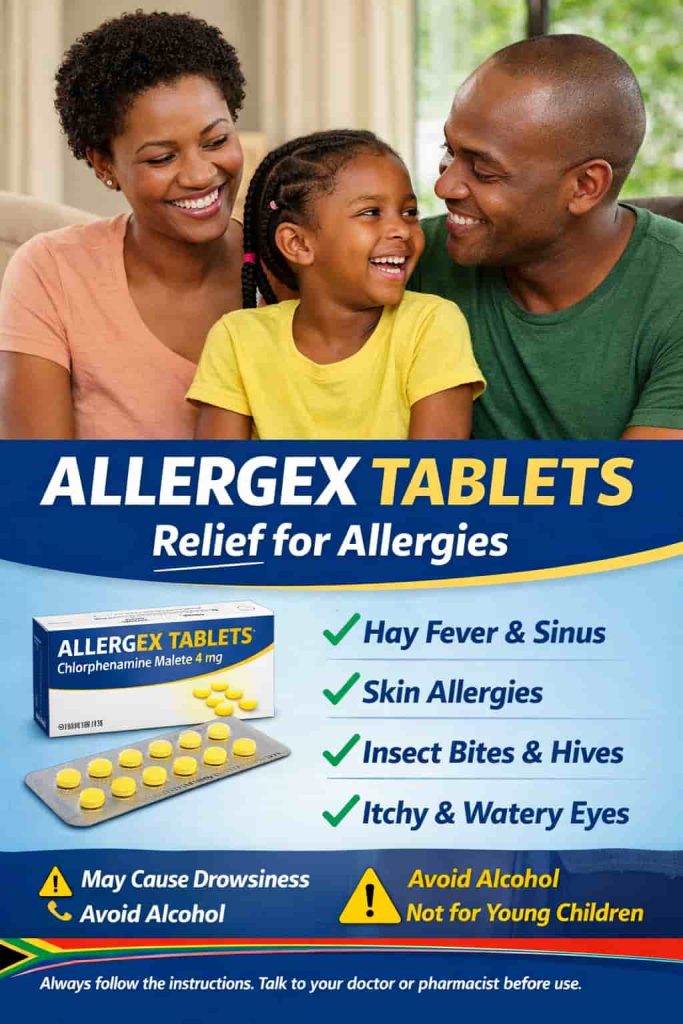
ALLERGEX Tablets are a commonly used antihistamine medicine designed to relieve a wide range of allergy-related symptoms. They contain chlorphenamine maleate (4 mg), an active ingredient that helps reduce the body’s allergic response by blocking the effects of histamine—a chemical released during allergic reactions.
People often turn to this medicine for relief from conditions such as hay fever, skin rashes, itching, and reactions to insect bites or certain medications. While it is effective in easing discomfort, it is also known to cause drowsiness, which means it must be used responsibly and with awareness of safety precautions.
This guide provides a detailed, easy-to-understand explanation of how ALLERGEX Tablets work, who can use them, how to take them correctly, and what side effects to watch for—all written in clear South African English.
Quick facts
- Active ingredient: Chlorphenamine maleate 4 mg
- Medicine group: Antihistamine
- Main purpose: Relief of allergic symptoms
- Common effect: Drowsiness or sedation
- Suitable for: Adults and children over 6 years
- Not suitable for: Newborns and premature infants
- Key caution: Avoid alcohol and driving
- Storage: Below 30°C, away from light and moisture
What it is and what it is used for
ALLERGEX Tablets belong to a class of medicines called antihistamines. These medicines are used to treat symptoms caused by allergies, which occur when the immune system reacts to harmless substances such as pollen, dust, food, or insect stings.
Conditions treated
According to the source, ALLERGEX Tablets are used in the management of:
- Hay fever (allergic rhinitis caused by pollen)
- Vasomotor rhinitis (non-allergic nasal congestion)
- Urticaria (hives or raised itchy rash)
- Angioedema (swelling beneath the skin, often around the face or lips)
- Allergic reactions to medications
- Contact dermatitis (skin irritation from substances)
- Atopic dermatitis (chronic skin condition with itching)
- Insect bites and stings
- General itching (pruritus)
- Pruritus vulvae (itching in the female genital area)
These conditions can vary in severity—from mild discomfort to more serious allergic reactions—and this medicine helps control the symptoms rather than cure the underlying cause.
How it works
When your body encounters something it identifies as harmful (even if it is not), it releases histamine. This chemical is responsible for many typical allergy symptoms, including:
- Sneezing
- Runny or blocked nose
- Itchy skin or eyes
- Swelling
- Redness
Chlorphenamine blocks histamine receptors in the body. By doing so, it prevents histamine from triggering these symptoms. This helps reduce inflammation, itching, and other discomforts associated with allergies.
However, because histamine also plays a role in keeping you alert, blocking it can lead to drowsiness. That is why this medicine may make you feel sleepy.
Who should NOT use this medicine
It is important to know when this medicine should be avoided.
Do not take ALLERGEX Tablets if:
- You are allergic to chlorphenamine maleate or any of the ingredients
- You have epilepsy or a history of repeated seizures
- You are experiencing an acute asthma attack
- You are a premature infant or a newborn baby
Warning: Taking this medicine when it is not suitable for you may increase the risk of serious side effects.
Warnings and precautions (Read before use)
Before starting ALLERGEX Tablets, consider the following safety information.
Drowsiness and alertness
- This medicine commonly causes sleepiness
- It may slow your reaction time
- Avoid driving, cycling, or operating machinery
Alcohol and sedatives
- Alcohol can increase the sedative effects
- Combining with sleeping tablets or tranquillisers can worsen drowsiness
Medical conditions requiring caution
Speak to a healthcare professional before use if you have:
- Enlarged prostate
- Glaucoma
- Urinary retention
Skin testing
- The medicine may interfere with allergy skin tests
- It should be stopped before testing
Pregnancy, planning pregnancy, and breastfeeding
- The safety of ALLERGEX Tablets during pregnancy and breastfeeding has not been established
- You should consult a doctor or pharmacist before use
- This applies if you are pregnant, planning pregnancy, or breastfeeding
Interactions
Some medicines may interact with ALLERGEX Tablets, affecting how they work or increasing side effects.
Known interactions
- CNS depressants (e.g. sleeping tablets, tranquillisers)
- Phenytoin (used for epilepsy)
- Monoamine oxidase inhibitors (MAOIs)
- Medicines for Parkinson’s disease
Practical tips
- Always inform your healthcare provider about all medicines you take
- Include herbal and traditional remedies
- Avoid alcohol while using this medicine
How to take (Step-by-step)
Follow these steps carefully:
- Take exactly as directed by your doctor or pharmacist
- Swallow the tablet with water
- Take doses at evenly spaced intervals
- Do not exceed the recommended daily dose
- Do not share your medicine with others
Missed dose
- Take it when you remember
- Skip if your next dose is near
- Do not take two doses at once
Overdose
Taking too much can be dangerous.
Symptoms may include:
- Hallucinations or confusion
- Tremors or seizures
- Severe drowsiness or coma
- Dry mouth and flushed skin
- High temperature
- Breathing or heart complications
Action: Seek immediate medical help.
Dosing table
| Age Group | Dose | Frequency | Maximum per 24 hours |
|---|---|---|---|
| Adults & children (12+) | 4 mg | Every 4–6 hours | 24 mg |
| Children (6–12 years) | 2 mg | Every 4–6 hours | 12 mg |
| Children under 6 | Not recommended | Not recommended | Not recommended |
Possible side effects
Common side effects
- Drowsiness
- Dizziness
- Headache
- Blurred vision
- Nausea or vomiting
- Diarrhoea
- Dry mouth
- Constipation
- Appetite changes
- Muscle weakness or tremors
Less common
Not specified in the source.
Serious — seek urgent help
- Swelling of the face, lips, or throat
- Difficulty breathing
- Irregular heartbeat
- Yellowing of the skin or eyes
- Severe dizziness or fainting
Storage and disposal
Storage
- Store below 30°C
- Keep in a tightly closed container
- Protect from light
- Keep out of reach of children
Disposal
- Return unused medicine to a pharmacist
- Do not dispose in water systems
What the medicine contains
- Chlorphenamine maleate 4 mg
- Lactose 119.80 mg
Pack information and appearance
Appearance
- Yellow, round tablets
- Convex shape
- Scored on one side
- Marked with “A” on the other side
Packaging
- Packs of 30 and 100
- Bulk packs of 1,000
- Available in blister packs or containers
Practical FAQs
Can I drink alcohol?
No. It increases drowsiness.
Can I drive?
No. It affects alertness.
Can children take it?
Yes, if over 6 years.
What if I miss a dose?
Take it when remembered unless near next dose.
Is it safe in pregnancy?
Not established—consult a doctor.

## 🩺 RxZest Medical Team
The **RxZest Medical Team** is dedicated to providing accurate, reliable, and easy-to-understand health information. Our team includes healthcare writers, medical researchers, and pharmacology specialists who simplify complex medical topics into clear, practical guidance.
All content is based on trusted medical sources and carefully reviewed for accuracy and safety. We focus on medicine-related topics such as uses, dosage, side effects, and precautions, ensuring information is helpful and up to date.
Our goal is to make health information accessible to everyone. Content is for educational purposes only and does not replace professional medical advice.