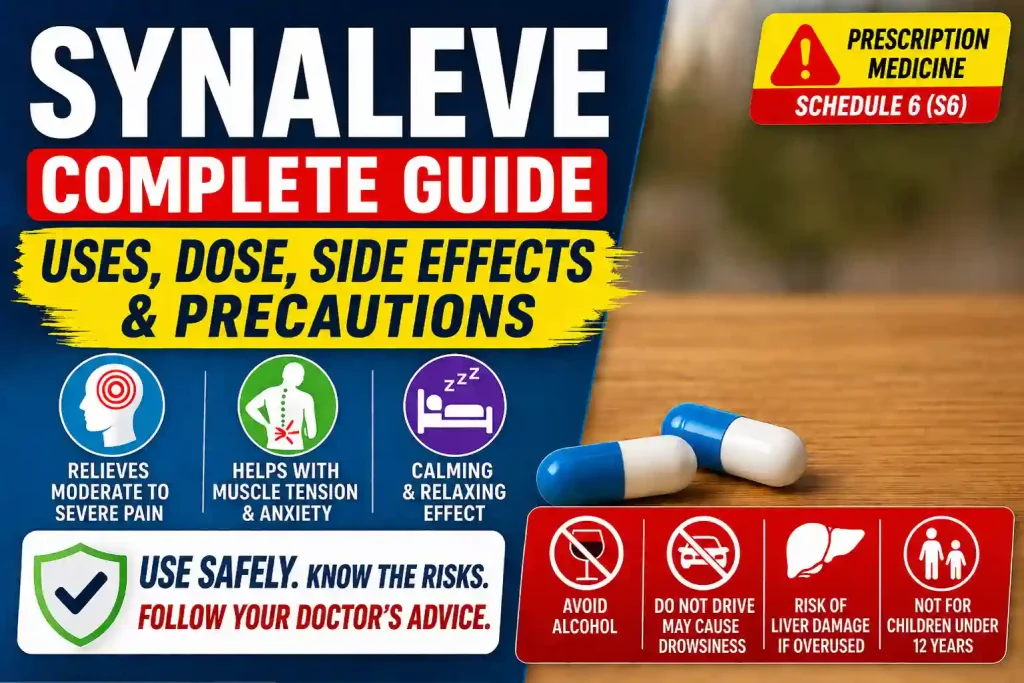
If you have been prescribed Synaleve, you may be using it because your pain is stronger than mild pain and your healthcare provider believes a combination pain medicine is needed. Synaleve is used for moderate to severe pain, including pain that may be linked with tension, anxiety, or muscle tightness.
Synaleve is not the same as taking ordinary paracetamol by itself. Each capsule contains three active ingredients that work in different ways:
- Paracetamol 400 mg
- Codeine phosphate 8 mg
- Meprobamate 200 mg
Because Synaleve contains codeine, which is an opioid, and meprobamate, which is a tranquiliser, it must be used with care. These ingredients can help with pain, but they can also cause drowsiness, constipation, slowed breathing, dependence, and other serious side effects if the medicine is not taken correctly.
Synaleve is a Schedule 5 prescription medicine in South Africa.
Warning: Synaleve can make you sleepy or less alert. Until you know how it affects you, do not drive, operate machinery, or do anything that needs full concentration.
What it is and what it is used for
What Synaleve is
Synaleve is a combination analgesic and sedative medicine. “Analgesic” means it helps relieve pain. “Sedative” means it may calm the nervous system and make you feel drowsy or relaxed.
The three ingredients work together:
- Paracetamol helps reduce pain and fever.
- Codeine phosphate adds opioid pain relief.
- Meprobamate has calming, sedative, and muscle-relaxing effects.
This combination may be useful when pain is not only physical but also affected by tension, stress, anxiety, or muscle tightness.
What Synaleve may be used for
Synaleve is used for moderate to severe pain. It may be prescribed when your healthcare provider believes a stronger pain medicine is needed.
It may be used for acute pain, such as:
- Headaches
- Migraines
- Dental pain
- Pain after surgery
It may also be used for chronic pain, such as:
- Arthritis
- Back pain
- Musculoskeletal pain
It may be used when pain is linked with tension, including:
- Muscle tightness
- Anxiety-related discomfort
Synaleve may also form part of a broader pain management plan. This means your doctor may use it together with other treatment approaches, depending on your condition and your safety needs.
Note: Do not assume Synaleve is suitable for every type of pain. It should be used only as directed by your doctor or pharmacist.
How it works
Synaleve works because its three active ingredients target pain and tension in different ways. Understanding this can help you use it more safely.
How paracetamol helps
Paracetamol works mainly in the brain. It helps reduce the effect of certain body chemicals involved in pain and body temperature. These chemicals are part of how your body sends pain messages.
In simple terms, paracetamol helps “turn down” pain signals. It may also help reduce fever, although Synaleve is being discussed here as a pain medicine.
Because Synaleve already contains paracetamol, you need to be careful not to take other medicines that also contain paracetamol. Taking too much paracetamol can cause serious liver damage.
How codeine helps
Codeine is a mild opioid. After you take it, your body changes codeine into morphine. Morphine then attaches to opioid receptors in the brain and spinal cord. These receptors are part of your body’s pain-control system.
This can make pain feel less intense. However, because codeine acts on the brain and nervous system, it can also cause side effects such as:
- Drowsiness
- Constipation
- Slowed breathing
- Dependence
This is why codeine-containing medicines should be used carefully and only as prescribed.
How meprobamate helps
Meprobamate acts on the central nervous system. The central nervous system includes your brain and spinal cord. Meprobamate has calming and sedative effects and may help relax muscles.
If your pain is made worse by muscle tension, stress, or anxiety, this calming effect may help you feel more comfortable. However, it can also make you sleepy or less alert.
Why the combination needs extra care
Because Synaleve affects both pain signals and the nervous system, it can be helpful but also risky if used incorrectly. Taking too much, mixing it with alcohol, or combining it with other sedating medicines can increase the chance of serious side effects.
Warning: Do not take extra capsules to get faster or stronger relief. This can increase the risk of overdose, liver damage, severe drowsiness, breathing problems, and dependence.
Who should NOT use this medicine
Synaleve is not suitable for everyone. Some people should not use it because the risks may be too high.
Do not use Synaleve if you:
- Have severe liver disease
- Have severe kidney disease
- Have respiratory depression or serious breathing problems
- Are allergic to paracetamol
- Are allergic to codeine
- Are allergic to meprobamate
- Are allergic to any other ingredient in the medicine
- Have a history of substance abuse
- Have a history of opioid abuse
- Are giving it to a child under 12 years of age
If any of these apply to you, do not take Synaleve unless your doctor has specifically assessed your situation and advised you. If you are unsure, ask your doctor or pharmacist before taking the first dose.
Why these restrictions matter
If you have severe liver disease, your body may not handle paracetamol safely. If you have severe kidney disease, your body may struggle to remove some ingredients properly. If you have serious breathing problems, codeine may worsen them because opioids can slow breathing.
If you have a history of substance or opioid abuse, Synaleve may not be suitable because codeine can cause dependence. Dependence means your body or mind may start relying on the medicine.
Warning: Never use someone else’s Synaleve. A medicine that is safe for one person may be unsafe for another.
Warnings and precautions
Speak to a healthcare professional before use
Before taking Synaleve, it is important to tell your doctor or pharmacist about your health conditions and any medicines you are taking. This includes prescription medicines, over-the-counter medicines, supplements, and herbal products.
This is especially important if you have:
- Liver problems
- Kidney problems
- Breathing problems
- A history of addiction or substance misuse
- Any condition that makes you very sensitive to sedating medicines
Liver precautions
Paracetamol is processed by the liver. If you take too much paracetamol, it can damage the liver. This risk may increase if you take Synaleve together with other medicines that contain paracetamol.
Many common medicines for pain, flu, colds, headaches, and fever may contain paracetamol. You may not always notice this unless you check the label or ask a pharmacist.
Note: If you are taking Synaleve, check every other pain, cold, flu, or headache medicine before using it.
Kidney precautions
Paracetamol and meprobamate rely on the kidneys for removal from the body. If your kidneys are not working well, medicine may stay in your body longer than expected, increasing the risk of side effects.
Severe kidney disease is listed as a reason not to use Synaleve.
Breathing precautions
Codeine can slow breathing. This is especially important if you already have a breathing condition such as:
- Asthma
- Chronic obstructive pulmonary disease, also called COPD
- Other breathing problems
If breathing becomes slow, shallow, or difficult after taking Synaleve, this is serious.
Warning: Seek urgent medical help if you have slow or difficult breathing, extreme sleepiness, or confusion after taking Synaleve.
Dependence and misuse risk
Codeine can cause physical and psychological dependence. Physical dependence means your body becomes used to the medicine. Psychological dependence means you may feel you need the medicine even when it may no longer be appropriate.
The risk is higher if Synaleve is used:
- For a long time
- In higher doses than prescribed
- More often than prescribed
- By someone with a history of substance or opioid abuse
Use Synaleve for the shortest time possible, unless your doctor has specifically advised longer use.
Older adults
Older adults may be more sensitive to Synaleve. Side effects such as dizziness, confusion, drowsiness, and breathing difficulties may be more likely or more serious.
If you are caring for an older person taking Synaleve, watch for:
- Unusual sleepiness
- Confusion
- Unsteadiness
- Falls risk
- Slow or difficult breathing
- Behaviour that seems out of character
Driving and using machinery
Synaleve may make you sleepy, dizzy, or less coordinated. It can slow your reaction time and affect your ability to concentrate.
Do not drive, operate machinery, climb ladders, or do anything risky until you know how the medicine affects you.
This is especially important when:
- You take your first dose
- Your dose is increased
- You have taken another medicine that causes drowsiness
- You feel tired, dizzy, or mentally foggy
Alcohol warning
You should avoid alcohol completely while taking Synaleve. Alcohol can increase the sedating effect of Synaleve and raise the risk of severe side effects.
Alcohol with Synaleve can increase the risk of:
- Extreme drowsiness
- Slowed breathing
- Loss of consciousness
Warning: Do not drink alcohol while using Synaleve. This includes beer, wine, spirits, and other alcoholic drinks.
Pregnancy, planning pregnancy, and breastfeeding
If you are pregnant
Synaleve is not recommended during pregnancy. Codeine may cause breathing problems in the unborn baby, especially if used close to delivery.
If you are already pregnant, think you might be pregnant, or become pregnant while taking Synaleve, speak to your doctor or pharmacist as soon as possible.
Do not continue taking Synaleve during pregnancy unless your doctor has specifically advised you after considering the risks and benefits.
If you are planning pregnancy
If you are planning to become pregnant, speak to your doctor or pharmacist before using Synaleve. Your healthcare provider can help decide whether this medicine is suitable or whether another pain management plan is needed.
If you are breastfeeding
Codeine passes into breast milk. A breastfed baby may be affected by codeine.
Possible effects in the baby include:
- Excessive sleepiness
- Feeding difficulties
- Breathing problems
If you are breastfeeding, speak to your doctor or pharmacist before using Synaleve.
Warning: If you are breastfeeding and your baby becomes unusually sleepy, struggles to feed, or has breathing problems, seek urgent medical help.
Interactions
Synaleve can interact with other medicines and substances. An interaction means one medicine or substance changes how another works or increases side effects.
Alcohol
Alcohol should be avoided completely while taking Synaleve. Alcohol can make the sedative effects stronger and may increase the risk of respiratory depression. Respiratory depression means breathing becomes too slow or weak.
This can be dangerous and may require urgent medical attention.
Sedatives, tranquillisers, and benzodiazepines
Synaleve may interact with medicines that slow or calm the nervous system, including:
- Sedatives
- Tranquillisers
- Benzodiazepines
Taking these with Synaleve may increase drowsiness and breathing-related risks.
If you are taking any medicine for sleep, anxiety, panic, muscle relaxation, or calming effects, check with your doctor or pharmacist before using Synaleve.
Other medicines containing paracetamol
Do not take Synaleve together with other medicines containing paracetamol unless your healthcare provider says it is safe.
This matters because each Synaleve capsule already contains paracetamol 400 mg. If you add another paracetamol-containing product, your total paracetamol intake may become too high.
Medicines that may contain paracetamol include some products for:
- Pain
- Headaches
- Colds
- Flu
- Fever
Always check the ingredients or ask a pharmacist.
Antidepressants
Synaleve may interact with certain antidepressants, including:
- Monoamine oxidase inhibitors, also called MAOIs
- Selective serotonin reuptake inhibitors, also called SSRIs
These interactions may be serious and may include serotonin syndrome. Symptoms of serotonin syndrome are not specified in the source.
If you are using antidepressants, tell your doctor or pharmacist before taking Synaleve.
Supplements and herbal products
Tell your healthcare provider about all supplements and herbal products you use. These can sometimes affect medicines or increase side effects.
A complete list of supplement and herbal interactions is not specified in the source.
Note: Because the full interaction list is not specified, it is safest to ask your doctor or pharmacist before combining Synaleve with any other medicine or health product.
How to take
Step-by-step instructions
Take Synaleve exactly as prescribed. Do not change your dose unless your doctor tells you to.
You should:
- Take the capsule by mouth
- Swallow it whole
- Take it with water
- Take it with or after food to reduce stomach upset
Do not crush, chew, or open the capsule unless your healthcare provider has specifically advised this. Instructions about crushing or opening the capsule are not specified in the source, so swallowing it whole is the guidance provided.
Adult dose
For adults, the dose is:
- 1 to 2 capsules every 4 to 6 hours as needed
- Do not take more than 8 capsules in 24 hours
This maximum daily dose is important because taking more can increase the risk of serious harm.
How to think about “as needed”
“As needed” means you take the medicine when you need it for pain, while staying within the prescribed limits. It does not mean you can take it whenever you like without tracking the dose.
You should keep track of:
- How many capsules you take
- What time you take each dose
- How much time has passed since your last dose
- Whether you have taken any other medicine containing paracetamol
Children
Synaleve is not recommended for children under 12 years of age.
Dosing for children aged 12 years and older is not specified in the source.
Do not give Synaleve to a child unless a healthcare professional has clearly prescribed or advised it.
Taking it with food
Take Synaleve with or after food to help reduce stomach upset. This may be especially helpful if you feel nauseous after taking medicines.
If your pain does not improve
If your pain does not improve, do not increase the dose yourself. Speak to your doctor. Your pain may need reassessment, or your treatment plan may need to change.
Taking extra Synaleve can be dangerous because it increases your exposure to paracetamol, codeine, and meprobamate.
If you miss a dose
If you miss a dose:
- Take it when you remember
- If your next dose is due soon, skip the missed dose
- Do not take a double dose to make up for the missed dose
This helps reduce the risk of taking too much in a short period.
If you take too much
Taking too much Synaleve can be dangerous. If an overdose is suspected, seek emergency medical help immediately, even if symptoms seem mild or unclear.
Possible serious concerns with overdose include effects linked to:
- Paracetamol
- Codeine
- Meprobamate
The exact overdose symptoms are not fully specified in the source, but urgent help is advised if overdose is suspected.
Warning: Do not wait for severe symptoms before getting help after a suspected overdose.
Dosing table
| Age or group | Dose | Frequency | Maximum daily dose |
|---|---|---|---|
| Adults | 1–2 capsules | Every 4–6 hours as needed | 8 capsules in 24 hours |
| Children under 12 years | Not recommended | Not specified in the source | Not specified in the source |
| Children 12 years and older | Not specified in the source | Not specified in the source | Not specified in the source |
Possible side effects
Synaleve can cause side effects. Some may be mild and temporary, while others can be serious and need urgent help.
Not everyone will get side effects, but you should know what to look out for.
Common side effects
Common side effects include:
- Nausea
- Vomiting
- Drowsiness
- Constipation
Nausea and vomiting
You may feel sick or vomit after taking Synaleve. Taking it with or after food may help reduce stomach upset.
If vomiting is severe, continues, or worries you, speak to your doctor or pharmacist.
Drowsiness
Drowsiness means you may feel sleepy, heavy, slow, or less alert. This can happen because Synaleve contains codeine and meprobamate, both of which affect the nervous system.
Do not drive or do risky tasks if you feel drowsy.
Constipation
Codeine can cause constipation. This means your bowel movements may become less frequent or harder to pass.
The source mentions drinking plenty of water as practical support. If constipation continues or becomes uncomfortable, speak to your doctor or pharmacist.
Less common side effects
Less common side effects include:
- Dizziness
- Dry mouth
- Mild skin rash
Dizziness
Dizziness may make you feel light-headed, unsteady, or at risk of falling. Be careful when standing up, walking, or using stairs.
Older adults should be especially cautious because dizziness can increase the risk of falls.
Dry mouth
Dry mouth can be uncomfortable. The source does not specify detailed management, but you can speak to your pharmacist if this bothers you.
Mild skin rash
A mild rash may occur. However, because rashes can sometimes be part of an allergic reaction, you should monitor it carefully.
Seek urgent help if a rash is severe or comes with swelling, itching, or breathing difficulty.
Serious side effects — seek urgent help
Some side effects need immediate medical attention.
Seek urgent help if you notice:
- Slow breathing
- Difficult breathing
- Extreme drowsiness
- Confusion
- Signs of severe liver damage
The exact signs of severe liver damage are not specified in the source. If you feel seriously unwell, or if you think you may have taken too much, seek emergency help.
Allergic reactions
Very rare allergic reactions may include:
- Swelling of the face
- Swelling of the lips
- Swelling of the throat
- Severe itching
- Severe rash
- Difficulty breathing
Warning: Swelling of the face, lips, or throat, or any difficulty breathing, can be dangerous. Get emergency medical help immediately.
Storage and disposal
How to store Synaleve
Store Synaleve safely and correctly. You should:
- Store it at 15–25°C
- Keep it in a dry place
- Protect it from light and moisture
- Keep it out of reach of children
- Do not use it after the expiry date
Because Synaleve contains codeine and meprobamate, safe storage is especially important. Do not leave it where children, teenagers, visitors, or pets can access it.
Where not to keep it
Avoid storing Synaleve in places where heat, moisture, or light may be a problem. For example, do not leave it in a hot car or a damp bathroom cupboard.
Expired or unused medicine
Do not use Synaleve after the expiry date. Return unused or expired medicine to a pharmacy for safe disposal.
Do not throw it where someone else may find it and use it.
What the medicine contains
Each Synaleve capsule contains:
| Ingredient | Amount per capsule | Why it is included |
|---|---|---|
| Paracetamol | 400 mg | Helps relieve pain and reduce fever |
| Codeine phosphate | 8 mg | Provides additional opioid pain relief |
| Meprobamate | 200 mg | Provides calming, sedative, and muscle-relaxing effects |
Other ingredients: No
Important excipients such as lactose, sugar, colourants, or preservatives: Not specified in the source.
Pack information and appearance
The following information is provided:
- Dosage form: Capsules
- Strength per capsule: Paracetamol 400 mg, codeine phosphate 8 mg, meprobamate 200 mg
- Pack size: Available 40-Pack
- Capsule colour: Turquoise and Pale Yellow
- Capsule shape: Normal
- Markings on capsule: Synaleve
- Available On Pharmacynet: Price R249,99
If you are unsure whether the capsules you have are correct, ask your pharmacist to check them.
Practical FAQs
Can I drink alcohol while taking Synaleve?
No. You should avoid alcohol completely while taking Synaleve. Alcohol can increase the risk of extreme drowsiness, slowed breathing, and loss of consciousness.
Can Synaleve make me sleepy?
Yes. Synaleve can cause drowsiness because it contains codeine and meprobamate. Do not drive, operate machinery, or do risky tasks if you feel sleepy or less alert.
Can Synaleve be addictive?
Yes. Synaleve contains codeine, which can cause dependence. The risk is higher if it is used for a long time, taken in higher doses, or used by someone with a history of substance or opioid abuse.
Can I take Synaleve with other pain medicines?
Only if your doctor or pharmacist says it is safe. Be especially careful with medicines that contain paracetamol or medicines that cause drowsiness.
Why must I check for paracetamol in other medicines?
Each Synaleve capsule already contains paracetamol 400 mg. If you take other medicines that also contain paracetamol, you may accidentally take too much, which can harm your liver.
What should I do if my pain is still bad?
Do not increase the dose on your own. Speak to your doctor if your pain does not improve or if you feel you need Synaleve for longer than expected.
Can children take Synaleve?
Synaleve is not recommended for children under 12 years. Dosing for children aged 12 years and older is not specified in the source.
Can I take Synaleve during pregnancy?
Synaleve is not recommended during pregnancy. Codeine may cause breathing problems in the unborn baby, especially if used close to delivery. Speak to your doctor or pharmacist.
Can I take Synaleve while breastfeeding?
Speak to your doctor or pharmacist before using Synaleve while breastfeeding. Codeine passes into breast milk and may cause excessive sleepiness, feeding difficulties, or breathing problems in a breastfed baby.
What should I do if I miss a dose?
Take it when you remember, unless your next dose is due soon. If the next dose is due soon, skip the missed one. Do not take a double dose.
What should I do if I accidentally take too much?
Seek emergency medical help immediately. Do not wait for severe symptoms, because overdose can be serious even if you do not feel very unwell at first.
How should I store Synaleve?
Store it at 15–25°C, in a dry place, away from light and moisture. Keep it out of reach of children and do not use it after the expiry date.
What should I do with unused Synaleve?
Return unused or expired Synaleve to a pharmacy for safe disposal.
Sources :
Written by: RxZest Editorial Team
Editorial review: Checked for readability, structure, and source alignment
Based on SAHPRA-approved information : Synaleve Capsules
Last updated: [02/05/2026]