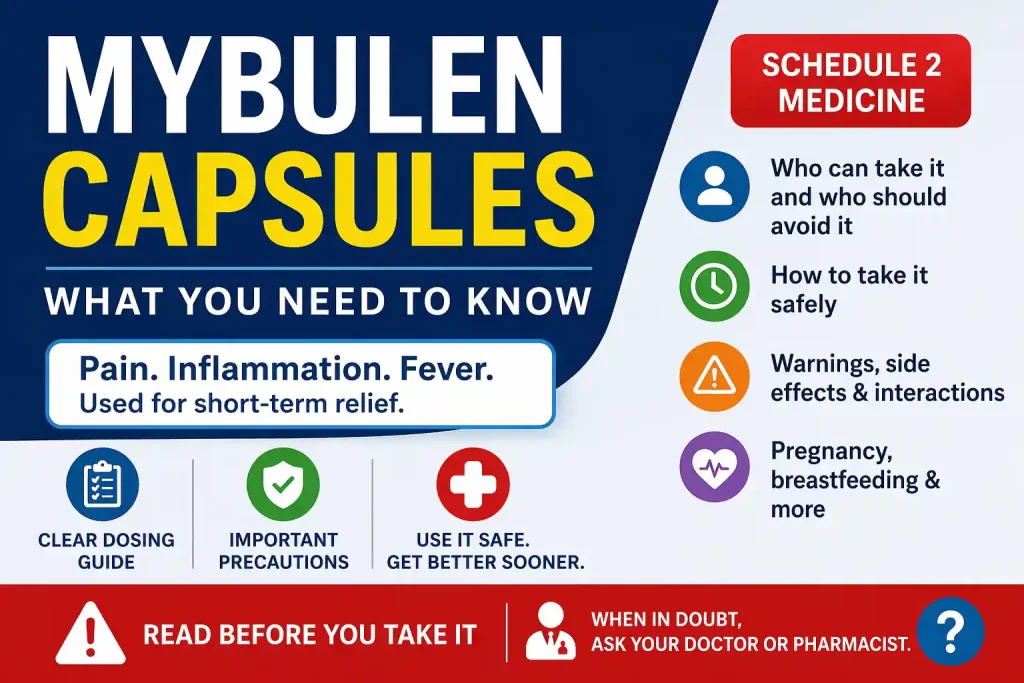
If you are thinking about using MYBULEN CAPSULES, or you are helping someone who is taking it, it is worth understanding exactly what this medicine is for and how to use it safely. This medicine contains ibuprofen, codeine phosphate, and paracetamol. It is used for the short-term relief of mild to moderate pain that is linked to inflammation, with or without fever. It is not meant for ongoing use, and the source states that treatment should not continue for more than 5 days.
Quick facts: MYBULEN CAPSULES is a Schedule 2 medicine in South Africa. Each capsule combines three pain-relieving ingredients. It is for oral use in adults and adolescents older than 12 years. The dose must stay within the stated limit, and overdose can be dangerous, especially because the medicine contains paracetamol and codeine.
What it is and what it is used for
Active ingredients and type of medicine
Each MYBULEN capsule contains:
- Ibuprofen 200 mg
- Codeine phosphate 10 mg
- Paracetamol 250 mg
It is an analgesic combination medicine, which means it combines more than one ingredient to help relieve pain. The source also describes it as having analgesic, anti-inflammatory, and antipyretic action, which means it may help with pain, inflammation, and fever.
What it is used for
According to the source, MYBULEN CAPSULES is indicated for:
- Relief of mild to moderate pain of inflammatory origin
- Use with or without fever
It is intended for a maximum treatment period of 5 days.
How it works
If you are taking this medicine, it may help to know that the three ingredients do not all work in the same way.
Ibuprofen
Ibuprofen helps by reducing the activity of substances in the body that are involved in inflammation, pain, and fever. In everyday terms, it works where the body is inflamed and helps calm that process down.
Paracetamol
Paracetamol helps to relieve pain and bring down fever. The source does not give a more detailed patient-level explanation beyond these effects.
Codeine phosphate
Codeine is changed by the body into morphine, and that contributes to the pain-relieving effect.
Why these ingredients are combined
From a patient’s point of view, this combination is meant to help when pain is not just uncomfortable but also has an inflammatory part to it. It also helps if fever is present. The source does not compare it with other pain medicines or say that it is suitable for all kinds of pain, so it should only be used for the purpose described above.
Who should NOT use this medicine
Do not use this medicine if you:
- Are allergic to ibuprofen, paracetamol, codeine, or any of the other ingredients in the capsule
- Are sensitive to aspirin or other NSAIDs
- Have a history of stomach or bowel ulceration, bleeding, or perforation linked to earlier NSAID use
- Have an active stomach or bowel ulcer, bleeding, or perforation
- Have a history of recurrent gastrointestinal ulcer, haemorrhage, or perforation
- Have impaired liver function
- Have impaired kidney function
- Have heart failure or cardiovascular disease
- Are having an attack of bronchial asthma
- Have uncontrolled asthma or bronchospasm
- Have heart failure secondary to chronic lung disease
- Have nasal polyps associated with aspirin-induced bronchospasm
- Have respiratory depression, especially with cyanosis or excessive bronchial secretions
- Have recently had surgery on the biliary tract
- Have acute alcoholism
- Have a head injury
- Have a condition where intracranial pressure is raised
- Are taking monoamine oxidase inhibitors (MAOIs), or stopped them within the last 14 days
- Are receiving coumarin anticoagulants
- Have diarrhoea associated with pseudomembranous colitis
- Are breastfeeding
- Are around 30 weeks pregnant or later
- Are 12 years old or younger
Warnings and precautions (Read before use)
Even if this medicine seems familiar, there are several situations where extra caution is needed.
Use the lowest amount for the shortest possible time
The source is clear that side effects may be reduced by using the lowest effective dose for the shortest necessary time. That means you should not take more than you need, and you should not keep using it once the advised treatment period has passed.
Stomach and bowel risks
One of the biggest concerns with the ibuprofen part of this medicine is irritation or damage to the stomach and bowel. Serious problems can include:
- Ulcers
- Bleeding
- Perforation
These reactions can happen with or without warning symptoms and can be fatal, especially in older persons. If you have ever had stomach or bowel problems such as ulcerative colitis, Crohn’s disease, hiatus hernia, gastro-oesophageal reflux disease, or angiodysplasia, you should be especially careful because these may get worse.
Warning: If you notice black stools, vomiting blood, or unusual abdominal symptoms, stop the medicine and seek medical help.
Heart, circulation, and fluid retention
This medicine may cause fluid retention and oedema, and it may worsen high blood pressure or heart failure. If you already have cardiovascular risk factors such as hypertension, hyperlipidaemia, diabetes mellitus, or smoking, the source says treatment should only happen after careful consideration.
Liver and kidney concerns
The source states that MYBULEN CAPSULES is contraindicated if you have impaired liver or kidney function. It also explains that ibuprofen may disturb kidney function by affecting blood flow through the kidneys, especially in people who are older, dehydrated, taking diuretics or ACE inhibitors, or living with heart failure or liver dysfunction.
Asthma, allergies, and breathing problems
If you have asthma, chronic rhinitis, sinusitis, nasal polyps, adenoids, or allergic disease, this medicine may trigger problems such as:
- Bronchospasm
- Urticaria
- Angioedema
- Worsening asthma
Because codeine can also affect breathing, caution is needed if you have respiratory impairment or disease.
Serious skin reactions
Rare but severe skin reactions have been reported, including:
- Stevens-Johnson syndrome
- Toxic epidermal necrolysis
- AGEP
- DRESS
These are serious medical emergencies. The source says the medicine should be stopped at the first sign of rash, mucosal lesions, or other signs of hypersensitivity.
This medicine may hide signs of infection
Because it can reduce pain, fever, and inflammation, it may make it harder to recognise an underlying infection. This could delay proper treatment. If you are using it for symptoms linked to infection and things are not improving, or are getting worse, you should see a doctor.
Risk of dependence
Because MYBULEN CAPSULES contains codeine, taking more than prescribed, or using it continuously for a prolonged period, may lead to dependency and addiction.
Other situations where caution is needed
The source says caution is needed if you have or have had:
- Systemic lupus erythematosus (SLE)
- Mixed connective tissue disease
- Disturbed haematopoiesis
- Blood clotting defects
- Anaemia
- Acute abdominal conditions
- Gallbladder disease or gallstones
- Cardiac dysrhythmias
- Convulsions or a history of convulsions
- Drug abuse or dependence
- Recent gastrointestinal tract surgery
- Hypothyroidism
- Adrenocortical insufficiency
- Inflammatory or obstructive bowel disorders
- Prostatic hypertrophy
- Urethral obstruction or stricture
- Recent urinary tract surgery
Alcohol and daily activities
Alcohol should be avoided. The source says alcohol may intensify side effects, especially those affecting the gastrointestinal tract, the liver, or the central nervous system.
Driving and using machines
This medicine may cause:
- Dizziness
- Drowsiness
- Visual disturbances
Do not drive, use machinery, or do anything needing full concentration until you are sure it does not affect you in that way.
Pregnancy, planning pregnancy, and breastfeeding
Pregnancy
The source states that MYBULEN CAPSULES is not recommended for pregnant women. There are specific concerns at different stages:
- In the first trimester, medicines that inhibit prostaglandin synthesis may adversely affect pregnancy or embryo/foetal development
- Between 20 and 30 weeks, use should be limited to the lowest effective dose for the shortest duration
- At around 30 weeks and later, use should be avoided
Possible risks mentioned in the source include:
- Oligohydramnios
- Foetal renal dysfunction
- Premature closure of the foetal ductus arteriosus
- Prolonged bleeding time
- Delayed or prolonged labour
Because the medicine contains codeine phosphate, pregnancy use is also associated with possible foetal dependence, withdrawal, growth retardation, and neonatal respiratory depression with high doses.
Planning pregnancy
The ibuprofen part may temporarily affect female fertility by affecting ovulation. The source says this effect is reversible after stopping treatment.
Breastfeeding
This medicine should not be used during breastfeeding. The source says ibuprofen passes into breast milk in very low concentrations, but codeine may expose a breastfed infant to morphine-related toxicity.
Interactions
MYBULEN CAPSULES can interact with many other medicines. This matters because interactions can increase side effects, reduce benefit, or make treatment less safe.
Medicines mentioned in the source
These include:
- Aspirin (acetylsalicylic acid)
- Other NSAIDs, including cyclooxygenase-2 selective inhibitors
- Warfarin and heparin
- Methotrexate
- Corticosteroids
- SSRIs
- Anti-platelet medicines such as clopidogrel and ticlopidine
- ACE inhibitors
- Beta blockers
- Angiotensin-II antagonists
- Diuretics
- Potassium-sparing diuretics
- Captopril
- Aminoglycosides
- Antidiabetic medicines, such as sulfonylureas
- Digoxin
- Phenytoin
- Lithium
- Ciclosporin
- Tacrolimus
- Colestyramine
- Mifepristone
- Probenecid
- Sulfinpyrazone
- Quinolone antibiotics
- Zidovudine
- Ritonavir
- Moclobemide
- Bone marrow depressants
- Bisphosphonates
- Oxpentifylline
- Baclofen
- Voriconazole
- Fluconazole
- Metoclopramide
- MAOIs
- Alcohol
- Central nervous system depressants
- Anticholinergics
- Antidiarrhoeals
- Medicines that produce hypotension
- Ginkgo biloba
Practical advice from the source
- Avoid taking it with other NSAIDs
- Avoid alcohol
- If you use colestyramine, keep at least a 1 hour interval
- If you are using certain diabetes medicines, blood glucose monitoring may be needed
- Some combinations may require monitoring of kidney function, potassium, blood counts, or medicine levels
- MAOIs are especially important, because this medicine is contraindicated with them and within 14 days of stopping them
Food, alcohol, and tests
- Alcohol: avoid it
- Food: not specified in the source
- Medical tests: the source mentions that monitoring may be needed in some situations, depending on the interacting medicine involved
How to take (Step-by-step)
Who can take it
This medicine is intended for:
- Adults
- Adolescents over 12 years
It is not recommended for children 12 years and younger.
Usual adult and adolescent dose
The source states:
- Take 1 to 2 capsules
- Take them every 4 hours
- Do not take more than 6 capsules in 24 hours
It also says: Do not exceed the recommended dose.
How long to use it
- Use for the shortest possible time
- Do not use continuously for longer than 5 days
- If you still need treatment after 5 days, consult your healthcare provider
The source also says that if it is taken for pain and the pain lasts longer than 5 days, or if it is taken for fever and the fever lasts longer than 3 days, or the condition gets worse or new symptoms develop, you should contact your doctor.
How to take it
- Take it by mouth
Whether it should be taken with food is not specified in the source.
Missed dose
Not specified in the source.
Overdose
Warning: MYBULEN CAPSULES contains paracetamol, which may be fatal in overdose. In the event of overdose or suspected overdose, the nearest doctor, hospital, or Poison Centre must be contacted immediately, even if the person seems well.
Simple ways to stay on track
Based on the source, sensible steps include:
- Keep count of how many capsules you have taken in 24 hours
- Do not keep using the medicine for more than 5 days
- Avoid alcohol
- Do not combine it with other NSAIDs unless a healthcare professional advises it
- Get medical advice if symptoms persist or worsen
Dosing table
| Age or group | Dose | Frequency | Maximum daily dose |
|---|---|---|---|
| Adults and adolescents over 12 years | 1 to 2 capsules | Every 4 hours | 6 capsules in 24 hours |
| Children 12 years and younger | Not recommended | Not applicable | Not applicable |
| Elderly or debilitated patients | Dose should be reduced | Not specified in the source | Not specified in the source |
Possible side effects
Not everyone gets side effects, but it is useful to know what might happen and what needs urgent attention.
Common
The source lists several effects that may happen relatively often, especially from ibuprofen or codeine. These include:
- Heartburn
- Dyspepsia
- Abdominal cramps and pain
- Nausea
- Vomiting
- Flatulence
- Diarrhoea
- Constipation
- Gastric irritation
- Dizziness
- Skin rash
- Pruritus
- Dry mouth
- Drowsiness
- Confusion
- Restlessness
- Mood changes
- Sweating
- Facial flushing
Less common
Less common side effects listed in the source include:
- Headache
- Somnolence
- Fatigue
- Agitation
- Irritability
- Blurred vision
- Tinnitus
- Impaired hearing
- Vertigo
- Peptic ulceration
- Gastrointestinal bleeding
- Gastritis
- Bloating
- Decreased appetite
- Oesophagitis
- Pancreatitis
- Abnormal liver function tests
- Hepatitis
- Jaundice
- Kidney impairment
- Acute renal failure
- Oedema
- Malaise
- Palpitations
- Bradycardia
- Orthostatic hypotension
- Respiratory depression
- Micturition difficulties
- Biliary spasm
- Hypothermia
Serious—seek urgent help
Get urgent medical help if you develop any of the following:
- Breathing difficulty, worsening asthma, or signs of respiratory depression
- Swelling of the face, tongue, or throat
- Severe rash, blistering, peeling skin, or mucosal sores
- Vomiting blood or black stools
- Severe abdominal symptoms
- Yellowing of the skin or eyes
- Severe drowsiness, loss of consciousness, or convulsions
- Unusual bruising or bleeding
- Fever, sore throat, mouth ulcers, or severe fatigue
- Sudden swelling or weight gain
- Stiff neck, headache, nausea, vomiting, fever, or confusion
These may point to serious allergic, gastrointestinal, liver, kidney, blood, neurological, or skin-related reactions.
What to do about side effects
The source advises patients taking MYBULEN CAPSULES to report symptoms such as:
- Signs of stomach ulceration or bleeding
- Blurred vision or other eye symptoms
- Skin rash
- Weight gain
- Oedema
Suspected adverse reactions may be reported to SAHPRA, and the source also lists Aspen Pharmacare contact details for reporting.
Storage and disposal
How to store it
Keep the medicine:
- At or below 25 °C
- In an airtight container
- Protected from moisture
- In the original packaging until it is needed
Always keep medicines out of reach of children.
Shelf life and expiry
The source gives a shelf life of 24 months. It does not give any further patient instruction beyond this, so expiry handling beyond normal use before the expiry date is not specified in the source.
Disposal
The source states:
- No special requirements
What the medicine contains
Active ingredients
Each capsule contains:
- Ibuprofen 200 mg
- Codeine phosphate 10 mg
- Paracetamol 250 mg
Other ingredients
The excipients listed in the source are:
- Brilliant blue
- Carmoisine
- Colloidal silicon dioxide
- Gelatin
- Magnesium stearate
- Quinoline yellow
- Sodium starch glycollate
- Titanium dioxide
Sugar content
- Sugar free
Pack information and appearance
What it looks like
The source describes MYBULEN CAPSULES as:
- White to off-white compacted powder
- In a size “0” capsule
- With a blue cap and blue body
Pack sizes and containers
Pack information in the source includes:
- 10 capsules packed in blister strips in a cardboard carton
- 30 capsules packed in a polypropylene securitainer with a tamper-evident cap and desiccant
Not all pack sizes are necessarily marketed.
Practical FAQs (based ONLY on the source)
Can I take this medicine for more than 5 days?
No. The source says it should not be taken continuously for more than 5 days. If you still need treatment after that, consult your healthcare provider.
Can I give it to a child?
Not if the child is 12 years old or younger. The source says it is not recommended for that age group.
Can I drink alcohol while using it?
No. The source says alcohol should be avoided because it may increase side effects, especially those affecting the stomach, liver, or central nervous system.
Can I drive after taking it?
You should wait until you know how it affects you. If it makes you dizzy, drowsy, or affects your vision, do not drive or use machinery.
Can I use it while breastfeeding?
No. The source states that MYBULEN CAPSULES should not be used during breastfeeding.
Is it safe in pregnancy?
It is not recommended during pregnancy, and it should be avoided around 30 weeks and later. Use between 20 and 30 weeks should be limited to the lowest effective dose for the shortest duration if it is considered necessary.
Can I take it with aspirin or another anti-inflammatory pain medicine?
This is not advised. The source says that use with aspirin or other NSAIDs should generally be avoided because of increased risk of side effects, especially bleeding and ulceration.
What should I do if I accidentally take too much?
Get help immediately. Even if there are no symptoms yet, the source says the nearest doctor, hospital, or Poison Centre must be contacted at once.
Does it contain sugar?
No. The source states that it is sugar free.
Should I take it with food?
This is not specified in the source.