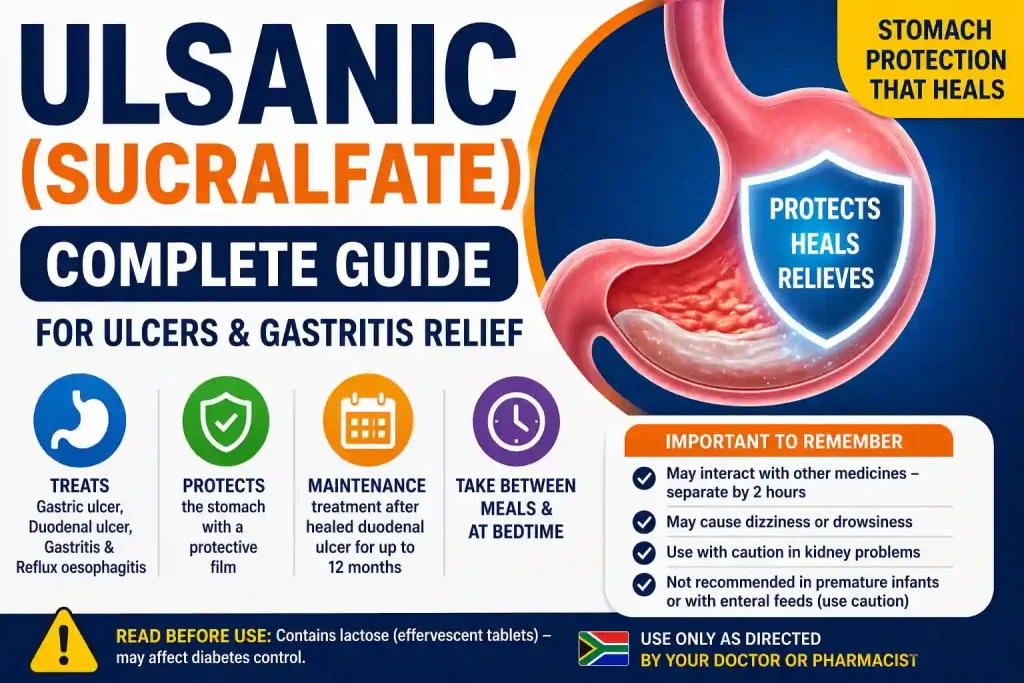
If you have been given ULSANIC (sucralfate), you are likely dealing with a stomach or food-pipe problem that needs extra protection while it heals. This medicine is used for conditions such as gastric ulcer, duodenal ulcer, chronic gastritis, and reflux oesophagitis. It may also help ease symptoms linked to peptic ulcers, such as upper stomach pain, too much stomach acid, and vomiting. It can also be used as maintenance treatment after a recently healed duodenal ulcer, once healing has been confirmed by endoscopy. SCHEDULING STATUS S0
What it is and what it is used for
ULSANIC contains the active ingredient sucralfate. It belongs to a group of medicines that act on the gastrointestinal tract. In simple terms, this means it works in your stomach and digestive system.
Available forms
You may receive ULSANIC in one of these forms:
- ULSANIC 1 g tablets
- ULSANIC effervescent tablets
- ULSANIC suspension
Each tablet contains 1 g of sucralfate. The suspension contains 1 g of sucralfate in each 5 ml.
What it is used for
This medicine is used for:
- Gastric ulcer
- Duodenal ulcer
- Chronic gastritis
- Reflux oesophagitis
It may also help relieve symptoms of peptic ulcer disease, including:
- Epigastric pain (pain in the upper abdomen)
- Hyperchlorhydria (too much stomach acid)
- Vomiting
It is also used as maintenance treatment after a recently healed duodenal ulcer that has been confirmed by endoscopy.
How it works (simple explanation)
If you are taking ULSANIC, the medicine works mainly by coating and protecting sore or damaged areas in your stomach or food pipe. It forms a protective film over inflamed or ulcerated tissue. This helps shield the area from irritation caused by stomach contents while healing takes place.
It can also reduce the damaging action of pepsin, which is a digestive substance in the stomach. In addition, sucralfate can absorb pepsin, trypsin and bile acids, which may further protect the stomach lining.
In everyday terms, you can think of it as a medicine that helps place a protective covering over irritated tissue, so the area has a better chance to settle and recover.
Who should NOT use this medicine
Do not use this medicine if you:
- Are allergic to sucralfate
- Are allergic to any of the other ingredients in your specific ULSANIC product
Extra caution with the effervescent tablets
Do not take ULSANIC effervescent tablets if you have any of these rare hereditary conditions:
- Galactose intolerance, such as galactosaemia
- Lapp lactase deficiency
- Glucose-galactose malabsorption
- Fructose intolerance
Warnings and precautions (Read before use)
Before using ULSANIC, it is important to know whether any special medical situations apply to you.
Kidney problems and dialysis
If you have renal impairment or you are on dialysis, this medicine should be used with caution. This is because there may be increased absorption of aluminium. In people with renal failure, this can lead to harmful effects.
The source says that in patients with kidney problems, aluminium accumulation and toxicity have been described. These effects may include:
- Aluminium osteodystrophy
- Osteomalacia
- Encephalopathy
If this applies to you, the source says that blood levels of the following should be measured from time to time:
- Aluminium
- Phosphate
- Calcium
- Alkaline phosphatase
Warning: If you have kidney disease, do not start or continue this medicine without proper medical advice and monitoring.
Low phosphate levels
Caution is also advised if you have phosphate deficiencies. Aluminium binds to phosphate in the gut and can stop it being absorbed properly.
Risk of bezoar formation
The source reports occasional cases of bezoar formation. A bezoar is an insoluble mass that forms in the stomach. This has been reported in people taking ULSANIC, especially in:
- Severely ill patients in Intensive Care Units
- Patients with delayed gastric emptying
- Patients receiving enteral feeds
The source also says that use in premature infants is not recommended.
Older persons
If you are older, extra care may be needed because the source states that elderly people often have reduced physiological function, and the dosage should be adjusted carefully.
Length of maintenance treatment
The source states that the safety and efficacy of maintenance treatment for longer than 12 months have not been established.
Driving and using machines
ULSANIC may cause:
- Dizziness
- Drowsiness
If this happens to you, take care with:
- Driving
- Using tools or machinery
- Any hazardous work
Note: Do not drive or operate machinery until you are reasonably sure the medicine does not affect you in this way.
Important information about excipients
The effervescent tablets contain lactose, which may affect glycaemic control in people with diabetes mellitus.
If you have diabetes, it is sensible to check with your doctor or pharmacist whether this form is suitable for you.
Pregnancy, planning pregnancy, and breastfeeding
The source says that safety in pregnant and lactating women has not been established.
It also says that it is not known whether ULSANIC passes into human breast milk.
If you are:
- Pregnant
- Planning a pregnancy
- Breastfeeding
speak to your doctor or pharmacist before using this medicine.
Interactions
ULSANIC can affect the absorption of other medicines. This means it may change how well some of your other treatment works if taken too close together.
Medicines that may be affected
The source lists the following medicines as examples that may be affected by ULSANIC:
- Cimetidine
- Ranitidine
- Digoxin
- Ketoconazole
- Phenytoin
- Fluoroquinolone antibacterials
- Tetracycline
- Levothyroxine
- Quinidine
- Theophylline
- Possibly warfarin
Timing matters
The source suggests leaving an interval of:
- 2 hours between ULSANIC and other concurrent non-antacid medicines
- 30 minutes between ULSANIC and other antacids
If you are on several medicines, it is especially important to ask your pharmacist to help you plan the timing.
Enteral feeding
Cases of bezoar formation have been reported when ULSANIC was given together with enteral feeds. The source recommends leaving one hour between ULSANIC and enteral feeding.
Food, alcohol, and tests
- Food: The source says the medicine is taken between meals and at bedtime.
- Alcohol: Not specified in the source.
- Medical tests: The source mentions blood monitoring in certain patients with kidney impairment, including levels of aluminium, phosphate, calcium and alkaline phosphatase.
How to take (Step-by-step)
Always take ULSANIC exactly as directed by your healthcare professional. The instructions below reflect what is given in the source.
Usual adult dose
The usual adult dose is:
- One tablet, or
- One effervescent tablet, or
- 5 ml suspension (one medicine measure)
taken three or four times a day, between meals and at bedtime.
Another dosing option for duodenal ulcer
The source also says that a dose of 2 g twice daily has been shown to be effective for treatment of duodenal ulcer. This means:
- 2 tablets, or
- 2 effervescent tablets, or
- 10 ml suspension
taken morning and evening.
Reflux oesophagitis
For reflux oesophagitis, the source says:
- One tablet mixed with water, or
- One effervescent tablet dissolved in water, or
- 5 ml suspension
taken four times a day between meals and at bedtime.
Maintenance treatment after healing of duodenal ulcer
For maintenance treatment after successful healing of a duodenal ulcer, the source says:
- One tablet or one effervescent tablet
- Twice daily
- One dose half an hour before breakfast
- One dose half an hour before supper
- Take it on an empty stomach
- Continue treatment for 12 months
How to take the effervescent tablets
If you are using the effervescent tablets, they should be dissolved in a glass of water before taking them.
Helpful day-to-day tips
Based on the source directions, these practical habits may help you take it correctly:
- Take it between meals, not with meals, if that is what you have been prescribed
- Keep bedtime doses as part of your routine
- If you use the suspension, use the medicine measure supplied, where provided
- If you take other medicines, separate the timing as instructed above
Children
Dosage for children is not specified in the source.
Missed dose
Not specified in the source.
If you are unsure what to do after missing a dose, ask your doctor or pharmacist for advice.
Overdose
If too much is taken, the source says treatment should be symptomatic and supportive.
If an overdose is suspected, get medical help as soon as possible.
Dosing table
| Age or weight | Dose | Frequency | Maximum daily dose |
|---|---|---|---|
| Adults (usual dose) | 1 tablet, 1 effervescent tablet, or 5 ml suspension | 3 or 4 times daily, between meals and at bedtime | Not specified in the source |
| Adults with duodenal ulcer (alternative regimen) | 2 tablets, 2 effervescent tablets, or 10 ml suspension | Twice daily, morning and evening | Not specified in the source |
| Adults with reflux oesophagitis | 1 tablet mixed with water, 1 effervescent tablet dissolved in water, or 5 ml suspension | 4 times daily, between meals and at bedtime | Not specified in the source |
| Adults on maintenance treatment after healed duodenal ulcer | 1 tablet or 1 effervescent tablet | Twice daily, half an hour before breakfast and half an hour before supper, on an empty stomach | Not specified in the source |
| Children | Not specified in the source | Not specified in the source | Not specified in the source |
Possible side effects
Not everyone gets side effects, but it helps to know what to look out for.
Common
The source lists the following as frequent:
- Constipation
If this happens, let your healthcare professional know if it becomes troublesome or does not settle.
Less common
The source lists these as less frequent:
- Dizziness
- Drowsiness
- Skin rashes
- Pruritus (itching)
- Diarrhoea
- Nausea
- Dry mouth
- Gastric discomfort
If you notice these effects, keep an eye on them and seek advice if they are severe, persistent, or worrying.
Serious—seek urgent help
The source does not present a formal “seek urgent help” list, but some effects and warnings need prompt medical attention.
Seek urgent medical help if you think you are having:
- An allergic reaction, especially if you know you are hypersensitive to sucralfate or any ingredient
- Severe or concerning effects linked to aluminium toxicity if you have kidney failure or severe kidney impairment
- Problems that may suggest a bezoar, especially if you are severely ill, have delayed gastric emptying, or are receiving enteral feeds
Frequency unknown
The source also lists side effects where the frequency is not known:
- Vertigo
- Back pain
Warning: If dizziness, drowsiness or vertigo affect you, do not drive or use machinery.
Storage and disposal
To store this medicine safely:
- Store it in a dry place
- Keep it at or below 25 °C
- Protect it from light
- Keep it in the original packaging until needed for use
- Keep it out of reach of children
Expiry
Expiry guidance is not specified in the source beyond the storage instructions above. Do not use medicine past its expiry date.
Disposal
Disposal instructions are not specified in the source.
What the medicine contains
Active ingredient
The active ingredient is sucralfate.
- ULSANIC 1 g tablets: each tablet contains 1 g of sucralfate
- ULSANIC effervescent tablets: each tablet contains 1 g of sucralfate
- ULSANIC suspension: each 5 ml contains 1 g of sucralfate
Other ingredients
ULSANIC 1 g tablets
Excipients listed are:
- Carmellose calcium
- Macrogol
- Magnesium stearate
- Microcrystalline cellulose
ULSANIC effervescent tablets
Excipients listed are:
- Flavour orange natural
- Lactose monohydrate
- Macrogol
- Povidone
- Quinoline Yellow WS
- Saccharin sodium
- Sodium cyclamate
- Sodium starch glycollate
- Sunset Yellow FCF Lake
They also contain:
- Sugar: lactose monohydrate 476 mg
- Sweeteners: sodium cyclamate 23,4 mg, saccharin sodium 3 mg
ULSANIC suspension
Excipients listed are:
- Flavour orange
- Glycerol
- Purified water
- Saccharin sodium
- Sodium acid phosphate
- Sodium methyl hydroxybenzoate
- Sodium propyl hydroxybenzoate
- Xanthan gum
Preservatives:
- Sodium methyl hydroxybenzoate 0,09% m/v
- Sodium propyl hydroxybenzoate 0,048% m/v
Sweetener:
- Saccharin sodium 0,3 mg
Pack information and appearance
What it looks like
- ULSANIC 1 g tablets: white, oblong, biconvex tablets, plain on one side and marked “ULSANIC” on the other side
- ULSANIC effervescent tablets: flat, round, faintly peach-coloured tablets with orange speckles and bevelled edges; when dissolved, they produce an orange-coloured opaque dispersion with an orange odour and bitter aftertaste
- ULSANIC suspension: thick off-white suspension with an orange odour
Pack sizes
The source lists these pack sizes:
ULSANIC 1 g tablets
- 20 tablets
- 120 tablets
ULSANIC effervescent tablets
- 10 effervescent tablets
- 20 effervescent tablets
ULSANIC suspension
- 100 ml
- 250 ml
- 600 ml
Not all pack sizes may be available for sale.
Practical FAQs (based ONLY on the source)
Can I take ULSANIC with other medicines?
You may need to separate the timing. The source says there should be a 2-hour gap between ULSANIC and other non-antacid medicines because sucralfate may interfere with how they are absorbed.
Can I take antacids as well?
Yes, but the source recommends leaving 30 minutes between ULSANIC and other antacids.
How should I take the effervescent tablets?
They should be dissolved in a glass of water before you take them.
Should I take this medicine with food?
The source says it should be taken between meals and at bedtime. For maintenance treatment after a healed duodenal ulcer, it should be taken on an empty stomach, half an hour before breakfast and half an hour before supper.
Can I drive while taking it?
Possibly, but only if it does not make you feel dizzy or drowsy. The source says ULSANIC may cause dizziness and drowsiness, so you should be careful with driving and machinery until you know how it affects you.
Can I use it if I have kidney disease?
Use with caution. The source says people with renal impairment or those on dialysis need special care because of the possibility of increased aluminium absorption and toxicity.
Can I use it during pregnancy or while breastfeeding?
The source says the safety in pregnant and lactating women has not been established, and it is not known whether the medicine is excreted in human breast milk.
Does the effervescent version contain sugar or lactose?
Yes. The source says the effervescent tablets contain lactose monohydrate and may affect glycaemic control in patients with diabetes mellitus.
Can it be used with enteral feeding?
Only with care. The source says there should be a one-hour interval between ULSANIC and enteral feeding because cases of bezoar formation have been reported when used together.
What side effect is reported most often?
The source lists constipation as the frequent side effect.