Erectile dysfunction, often called ED, is a common problem that affects millions of men around the world. Even though many people do not openly talk about it, ED can have a major impact on confidence, relationships, and overall quality of life.
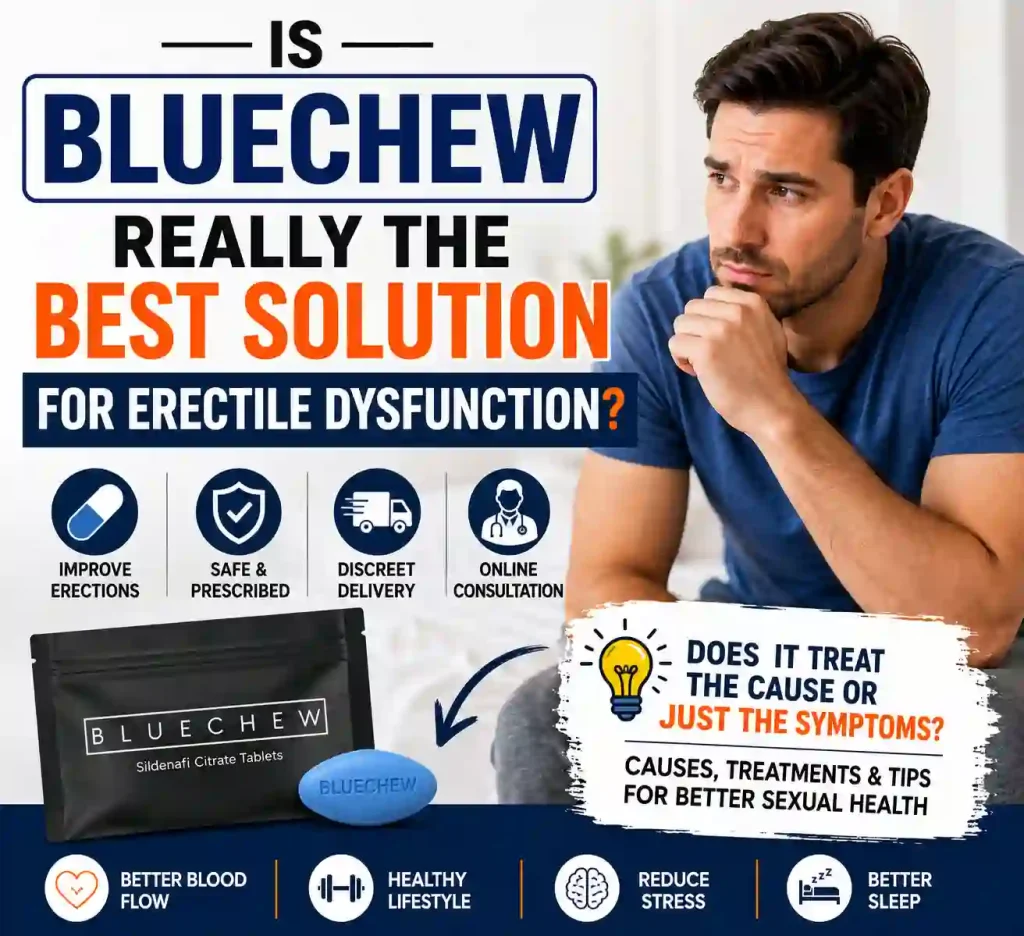
In recent years, online services like BlueChew have become popular because they make it easier for men to get treatment from the comfort of their homes. Instead of scheduling an appointment and visiting a doctor’s office, many men can complete an online consultation and receive medication directly at their doorstep.
At first glance, this seems like the perfect solution. You take a pill, improve your erections, and move on with your life. But is it really that simple?
The truth is that erectile dysfunction is often a sign that something else is happening inside the body. While medications can help many men achieve better erections, they do not always address the actual reason why erectile dysfunction developed in the first place.
Understanding the root cause of ED is often the key to finding long-term improvement. In this guide, we’ll explain everything in simple language so you can understand what erectile dysfunction is, how ED medications work, why ED happens, and what steps you can take to improve your sexual health.
Understanding Erectile Dysfunction
Before talking about treatments, it’s important to understand what erectile dysfunction actually means.
ED is the inability to get or keep an erection that is firm enough for sexual activity. Every man experiences occasional difficulties from time to time. Stress, lack of sleep, alcohol consumption, or even nervousness can affect sexual performance.
However, if erection problems happen regularly or continue for several weeks or months, it may indicate a deeper issue.
Many men think erectile dysfunction only affects older adults. While age can increase the risk, younger men can also experience ED. In fact, stress, anxiety, unhealthy lifestyle habits, and certain medical conditions can cause erectile dysfunction at almost any age.
The good news is that ED is often treatable when the underlying cause is identified.
How an Erection Happens
Most people don’t think about how complex an erection actually is.
An erection requires several systems in the body to work together perfectly.
First, the brain receives sexual stimulation. This could be physical touch, romantic feelings, visual attraction, or sexual thoughts.
Next, the brain sends signals through the nervous system to blood vessels in the penis.
These blood vessels relax and allow more blood to flow into the erectile tissues. As these tissues fill with blood, the penis becomes firm and enlarged.
At the same time, blood becomes trapped inside the penis to maintain the erection.
If there is a problem with blood flow, nerve function, hormones, emotional health, or any other part of this process, erectile dysfunction can occur.
This is one reason why ED should not be viewed as just a sexual problem. It can often be connected to a person’s overall health.
What Is BlueChew?
BlueChew is a telehealth platform that helps men access prescription medications used to treat erectile dysfunction.
The service is known for offering chewable forms of medications that are commonly prescribed for ED.
The convenience of online consultations and home delivery has made these services popular among men who may feel uncomfortable discussing erectile dysfunction face-to-face.
The medications work by increasing blood flow to the penis, making it easier to achieve and maintain an erection during sexual activity.
However, it is important to understand that these medications do not automatically create an erection.
Sexual stimulation is still necessary.
Think of ED medication as helping your body’s natural erection process work more effectively rather than creating sexual desire on its own.
Why Erectile Dysfunction Happens
One of the biggest mistakes men make is assuming erectile dysfunction has only one cause.
In reality, ED can result from many different factors.
Sometimes several causes work together.
Let’s look at some of the most common reasons.
Poor Blood Flow
Healthy blood circulation is essential for strong erections.
When blood vessels become damaged or narrowed, less blood reaches the penis.
As a result, erections may become weaker, less reliable, or more difficult to maintain.
Several conditions can contribute to poor circulation, including:
- High blood pressure
- High cholesterol
- Obesity
- Heart disease
- Smoking
- Lack of physical activity
In many cases, erectile dysfunction may appear before symptoms of heart disease become obvious.
This is why doctors often view ED as an early warning sign of cardiovascular problems.
Diabetes and Erectile Dysfunction
Diabetes is one of the leading causes of erectile dysfunction.
High blood sugar levels can damage blood vessels and nerves throughout the body.
Since erections depend heavily on healthy nerves and blood circulation, diabetes can significantly affect sexual performance.
Men with diabetes often experience erectile dysfunction earlier and more frequently than men without diabetes.
Proper blood sugar management can play an important role in improving sexual health.
Low Testosterone Levels
Testosterone is the primary male sex hormone.
It helps regulate:
- Sex drive
- Energy levels
- Mood
- Muscle strength
- Sexual performance
When testosterone levels drop, men may notice reduced interest in sex, fatigue, difficulty concentrating, and weaker erections.
Although low testosterone is not responsible for every case of erectile dysfunction, it can be an important factor for some men.
Stress and Anxiety
The mind has a powerful effect on sexual performance.
Many men are surprised to learn how much stress can interfere with erections.
When you’re stressed, your body releases hormones that prepare you to deal with challenges. Unfortunately, these hormones can make it more difficult to relax and enjoy sexual activity.
Work pressure, financial concerns, family responsibilities, and relationship issues can all contribute to erectile dysfunction.
Performance anxiety is another common issue.
A man may experience one episode of erectile difficulty and begin worrying that it will happen again.
This worry creates anxiety, which then makes erections even harder to achieve.
Over time, a frustrating cycle develops.
Depression and Emotional Health
Depression affects much more than mood.
Many men with depression experience:
- Reduced sexual desire
- Lower energy levels
- Difficulty becoming aroused
- Erectile dysfunction
In some cases, medications used to treat depression can also contribute to sexual side effects.
Addressing mental health concerns can often improve both emotional well-being and sexual performance.
Lifestyle Habits That Affect Erections
Your daily habits can have a major impact on erectile function.
Lack of Exercise
Physical activity helps maintain healthy blood flow throughout the body.
Men who exercise regularly often have better cardiovascular health, improved energy levels, and healthier hormone balance.
Excess Weight
Being overweight increases the risk of many conditions linked to erectile dysfunction.
Losing weight can improve circulation, reduce inflammation, and support healthy hormone levels.
Smoking
Smoking damages blood vessels and restricts blood flow.
Over time, this damage can make erections more difficult to achieve and maintain.
Excessive Alcohol Consumption
While moderate alcohol use may not cause significant problems, excessive drinking can interfere with sexual performance.
Alcohol can reduce sexual responsiveness and make erections less reliable.
Poor Sleep
Sleep plays a critical role in hormone production and overall health.
Men who consistently get poor-quality sleep may experience lower testosterone levels, fatigue, and reduced sexual performance.
Can ED Medication Solve the Problem?
For many men, ED medication can be very effective.
It can improve blood flow, increase confidence, and help create more reliable erections.
However, medication is not always a complete solution.
If erectile dysfunction is caused by diabetes, cardiovascular disease, hormonal imbalances, chronic stress, or other health issues, medication may only address the symptom.
Think of it this way.
If a warning light appears on your car dashboard, covering the light does not fix the engine.
Similarly, improving erections does not necessarily solve the underlying condition causing ED.
This is why understanding the root cause is so important.
The Best Long-Term Approach
The most successful treatment plans usually combine several strategies.
These may include:
- Medical evaluation
- Lifestyle improvements
- Stress management
- Better sleep habits
- Weight management
- Exercise
- Relationship support
- Medication when appropriate
By addressing both symptoms and causes, men often experience better long-term results.
When You Should Talk to a Doctor
Many men feel embarrassed about discussing erectile dysfunction.
However, ED is extremely common, and healthcare providers deal with it regularly.
You should consider speaking with a healthcare professional if:
- Erectile dysfunction happens frequently
- Symptoms continue for several months
- You notice a sudden change in sexual performance
- Your sex drive decreases significantly
- Current treatments are not helping
Getting evaluated early may help identify health conditions before they become more serious.
Final Thoughts
Erectile dysfunction is more common than many people realize, and it can affect men of all ages. While services like BlueChew offer convenient access to treatment and can help many men improve their erections, medication is not always the complete answer.
ED is often connected to broader health issues involving circulation, hormones, stress, lifestyle habits, or chronic medical conditions. Understanding these factors is the first step toward finding a lasting solution.
Rather than focusing only on erections, men should think about their overall health. Better sleep, regular exercise, stress management, healthy eating habits, and medical guidance can all contribute to improved sexual performance.
Most importantly, erectile dysfunction is nothing to be ashamed of. With the right approach, many men can successfully manage ED and enjoy a healthier, more satisfying life.
If you want a more unique and authoritative References section, avoid citing multiple papers by the same authors covering similar topics. Instead, use a broader mix of guidelines, reviews, and landmark studies.
References
- Burnett AL, Nehra A, Breau RH, Culkin DJ, Faraday MM, Hakim LS, Heidelbaugh JJ, Khera M, McVary KT, Miner MM, Nelson CJ, Sadeghi-Nejad H, Seftel AD, Shindel AW. Erectile Dysfunction: AUA Guideline. The Journal of Urology. 2018;200(3):633-641. doi:10.1016/j.juro.2018.05.004.
- Yafi FA, Jenkins L, Albersen M, Corona G, Isidori AM, Goldfarb S, Maggi M, Nelson CJ, Parish S, Salonia A, Tan R, Mulhall JP, Hellstrom WJG. Erectile Dysfunction. Nature Reviews Disease Primers. 2016;2:16003. doi:10.1038/nrdp.2016.3.
- Goldstein I, Burnett AL, Rosen RC, Park PW, Stecher VJ. The Serendipitous Story of Sildenafil: An Unexpected Oral Therapy for Erectile Dysfunction. Sexual Medicine Reviews. 2019;7(1):115-128. doi:10.1016/j.sxmr.2018.06.005.
- Miner M, Parish SJ, Billups KL, Paulos M, Sigman M, Blaha MJ. Erectile Dysfunction and Subclinical Cardiovascular Disease. Sexual Medicine Reviews. 2019;7(3):455-463. doi:10.1016/j.sxmr.2018.09.001.
- Corona G, Rastrelli G, Burri A, Jannini EA, Maggi M. The Safety and Efficacy of Phosphodiesterase Type 5 Inhibitors for Erectile Dysfunction: A Systematic Review and Meta-Analysis. European Urology. 2018;74(2):141-152.
- McCabe MP, Sharlip ID, Atalla E, Balon R, Fisher AD, Laumann E, Lee SW, Lewis R, Segraves RT. Definitions of Sexual Dysfunctions in Men and Women: A Consensus Statement. The Journal of Sexual Medicine. 2016;13(2):135-143. doi:10.1016/j.jsxm.2015.12.019.
- Hackett G. The Role of Testosterone in the Treatment of Erectile Dysfunction. Current Sexual Health Reports. 2020;12(4):197-205. doi:10.1007/s11930-020-00272-6.
- Jackson G, Boon N, Eardley I, Kirby M, Dean J, Hackett G. Erectile Dysfunction and Coronary Artery Disease Prediction: Evidence-Based Guidance and Consensus. International Journal of Clinical Practice. 2010;64(7):848-857. doi:10.1111/j.1742-1241.2009.02264.x.
- Rosen RC, Cappelleri JC, Gendrano N. The International Index of Erectile Function (IIEF): A State-of-the-Science Review. International Journal of Impotence Research. 2002;14(4):226-244. doi:10.1038/sj.ijir.3900857.
- Feldman HA, Goldstein I, Hatzichristou DG, Krane RJ, McKinlay JB. Impotence and Its Medical and Psychosocial Correlates: Results of the Massachusetts Male Aging Study. The Journal of Urology. 1994;151(1):54-61. doi:10.1016/S0022-5347(17)34871-1.
Author Note
The information provided in this article is intended for educational purposes only and should not replace professional medical advice, diagnosis, or treatment. Anyone experiencing erectile dysfunction should consult a qualified healthcare provider for personalized medical guidance.

## 🩺 RxZest Medical Team
The **RxZest Medical Team** is dedicated to providing accurate, reliable, and easy-to-understand health information. Our team includes healthcare writers, medical researchers, and pharmacology specialists who simplify complex medical topics into clear, practical guidance.
All content is based on trusted medical sources and carefully reviewed for accuracy and safety. We focus on medicine-related topics such as uses, dosage, side effects, and precautions, ensuring information is helpful and up to date.
Our goal is to make health information accessible to everyone. Content is for educational purposes only and does not replace professional medical advice.