The hypothalamus is a small but extremely important part of the brain that acts as the body’s control center. Although it is only about the size of an almond, it plays a major role in maintaining the body’s internal balance, also known as homeostasis.
The hypothalamus controls several vital functions, including body temperature, hunger, thirst, sleep, emotions, hormone production, and the functioning of the endocrine system. Because of its wide range of responsibilities, it is often referred to as the link between the nervous system and the endocrine system.
What Is the Hypothalamus?
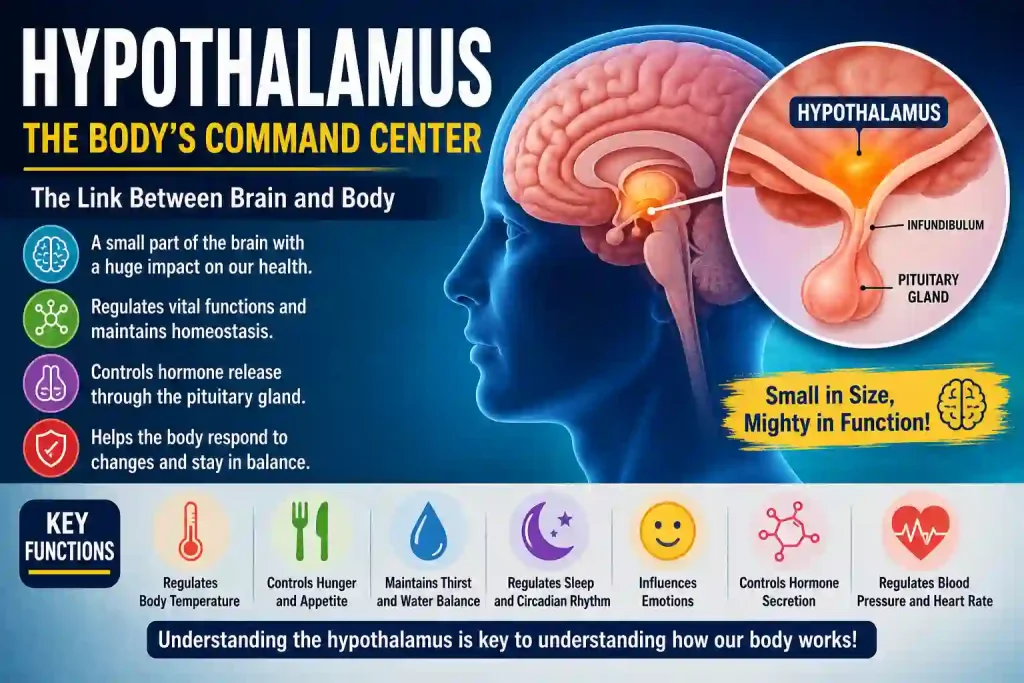
The hypothalamus is a region of the brain located below the thalamus and above the pituitary gland. It is part of the diencephalon and is situated near the center of the brain.
Despite its small size, the hypothalamus receives information from different parts of the body and responds by sending signals to maintain normal body functions.
Why Is the Hypothalamus Important?
The hypothalamus helps the body maintain a stable internal environment. It constantly monitors factors such as temperature, fluid levels, blood pressure, and hormone levels.
Whenever there is a change in these conditions, the hypothalamus activates appropriate responses to restore balance.
Location and Structure of the Hypothalamus
The hypothalamus is located at the base of the brain and forms the floor of the third ventricle.
Position in the Brain
The hypothalamus lies directly below the thalamus and is connected to the pituitary gland through a stalk-like structure called the infundibulum.
This close relationship allows the hypothalamus to regulate many hormonal functions through the pituitary gland.
Major Regions of the Hypothalamus
The hypothalamus is divided into several regions and nuclei. Each nucleus has specific functions related to body regulation.
Some of the important nuclei include:
- Supraoptic nucleus
- Paraventricular nucleus
- Arcuate nucleus
- Ventromedial nucleus
- Lateral hypothalamic area
- Suprachiasmatic nucleus
Together, these nuclei coordinate many essential physiological activities.
Functions of the Hypothalamus
The hypothalamus performs numerous functions that are necessary for survival and overall health.
Regulation of Body Temperature
One of the most important functions of the hypothalamus is temperature regulation.
It acts like the body’s thermostat. When body temperature rises, the hypothalamus triggers sweating and increased blood flow to the skin. When body temperature drops, it stimulates shivering and heat conservation mechanisms.
Control of Hunger and Appetite
The hypothalamus plays a key role in controlling food intake.
Certain areas of the hypothalamus stimulate hunger, while others signal fullness after eating. These centers help regulate body weight and energy balance.
Regulation of Thirst and Water Balance
The hypothalamus constantly monitors the body’s fluid levels.
When dehydration occurs, it stimulates thirst and promotes the release of antidiuretic hormone (ADH), which helps the kidneys conserve water.
Control of Sleep and Wakefulness
The hypothalamus is involved in regulating sleep patterns and maintaining the body’s biological clock.
It helps control the sleep-wake cycle and ensures that various body functions follow a regular daily rhythm.
Regulation of Emotions
The hypothalamus influences emotional responses such as fear, pleasure, anger, and stress.
It works closely with other parts of the brain, especially the limbic system, to coordinate emotional behavior.
Regulation of Blood Pressure
The hypothalamus helps control blood pressure and heart rate by interacting with the autonomic nervous system.
It can adjust cardiovascular activity according to the body’s needs.
Hypothalamus and the Endocrine System
One of the most significant roles of the hypothalamus is its control over the endocrine system.
Connection with the Pituitary Gland
The hypothalamus and pituitary gland work together to regulate hormone secretion throughout the body.
The hypothalamus produces releasing and inhibiting hormones that control the activity of the pituitary gland.
Because of this close relationship, the hypothalamus is often considered the master regulator of the endocrine system.
Hormones Produced by the Hypothalamus
The hypothalamus produces several hormones that directly or indirectly influence body functions.
Important hypothalamic hormones include:
- Thyrotropin-releasing hormone (TRH)
- Gonadotropin-releasing hormone (GnRH)
- Corticotropin-releasing hormone (CRH)
- Growth hormone-releasing hormone (GHRH)
- Somatostatin
- Dopamine
These hormones regulate the secretion of hormones from the pituitary gland.
Production of ADH and Oxytocin
The hypothalamus synthesizes antidiuretic hormone (ADH) and oxytocin.
These hormones are transported to the posterior pituitary gland, where they are stored and released into the bloodstream when needed.
Hypothalamus and Homeostasis
Homeostasis refers to the maintenance of a stable internal environment within the body.
Role in Maintaining Balance
The hypothalamus continuously receives information from the nervous system and bloodstream.
Based on this information, it makes adjustments to keep conditions within normal limits.
For example, it regulates body temperature, blood glucose levels, fluid balance, and hormone secretion.
Importance of Homeostasis
Without the hypothalamus, the body would struggle to maintain stable conditions necessary for survival.
Even small disturbances in homeostasis can affect overall health and organ function.
Hypothalamus and the Autonomic Nervous System
The hypothalamus is closely connected to the autonomic nervous system.
Control of Involuntary Functions
Many body functions occur automatically without conscious control.
The hypothalamus helps regulate:
- Heart rate
- Blood pressure
- Digestion
- Breathing patterns
- Sweating
These functions are essential for everyday survival.
Response to Stress
During stressful situations, the hypothalamus activates the body’s fight-or-flight response.
This leads to the release of stress hormones and prepares the body to react quickly to potential threats.
Disorders of the Hypothalamus
Damage or dysfunction of the hypothalamus can affect multiple body systems.
Causes of Hypothalamic Disorders
Several factors may interfere with normal hypothalamic function, including:
- Brain tumors
- Head injuries
- Infections
- Genetic disorders
- Inflammation
- Radiation therapy
Symptoms of Hypothalamic Dysfunction
Symptoms vary depending on the affected area but may include:
- Abnormal body temperature
- Sleep disturbances
- Excessive hunger or loss of appetite
- Weight gain or weight loss
- Hormonal imbalances
- Excessive thirst
- Emotional changes
Diabetes Insipidus
Damage to the hypothalamus may reduce ADH production, leading to diabetes insipidus.
This condition causes excessive urination and intense thirst because the body cannot conserve water properly.
Sleep Disorders
Since the hypothalamus regulates the sleep-wake cycle, dysfunction may result in insomnia or abnormal sleep patterns.
Hypothalamus and Reproduction
The hypothalamus plays a vital role in reproductive health.
Regulation of Reproductive Hormones
The hypothalamus releases gonadotropin-releasing hormone (GnRH), which stimulates the pituitary gland to produce reproductive hormones.
These hormones regulate:
- Puberty
- Menstrual cycles
- Sperm production
- Fertility
Role During Pregnancy and Childbirth
The hypothalamus contributes to childbirth by producing oxytocin.
Oxytocin stimulates uterine contractions during labor and promotes milk ejection during breastfeeding.
Clinical Importance of the Hypothalamus
The hypothalamus is important in many medical conditions because it affects multiple body systems.
Importance in Endocrine Disorders
Many hormonal disorders can be traced back to problems involving the hypothalamus or its connection with the pituitary gland.
Importance in Neurological Research
Scientists continue to study the hypothalamus because of its role in behavior, sleep, metabolism, obesity, and emotional regulation.
Research on this structure may help improve treatments for several neurological and endocrine disorders.
Conclusion
The hypothalamus is a small yet powerful region of the brain that plays a critical role in maintaining the body’s internal balance. It regulates essential functions such as temperature control, hunger, thirst, sleep, emotions, hormone secretion, and autonomic nervous system activity.
Through its close connection with the pituitary gland, the hypothalamus serves as a bridge between the nervous and endocrine systems. Despite its small size, it influences nearly every major physiological process, making it one of the most important structures in the human body.

## 🩺 RxZest Medical Team
The **RxZest Medical Team** is dedicated to providing accurate, reliable, and easy-to-understand health information. Our team includes healthcare writers, medical researchers, and pharmacology specialists who simplify complex medical topics into clear, practical guidance.
All content is based on trusted medical sources and carefully reviewed for accuracy and safety. We focus on medicine-related topics such as uses, dosage, side effects, and precautions, ensuring information is helpful and up to date.
Our goal is to make health information accessible to everyone. Content is for educational purposes only and does not replace professional medical advice.