SCHEDULING STATUS
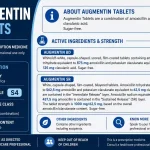
S4
PROPRIETARY NAMES AND DOSAGE FORM
AUGMENTIN BD tablets
AUGMENTIN SR tablets
COMPOSITION
AUGMENTIN BD
AUGMENTIN BD tablets are white to off-white, capsule-shaped, scored, film-coated tablets.
Each tablet contains:
| Active ingredient | Quantity |
|---|---|
| Amoxicillin trihydrate equivalent to amoxicillin | 875 mg |
| Potassium clavulanate equivalent to clavulanic acid | 125 mg |
Excipients
The tablet core contains:
| Tablet core ingredients |
|---|
| Colloidal anhydrous silica |
| Magnesium stearate |
| Microcrystalline cellulose |
| Sodium starch glycollate |
The film-coat contains:
| Film-coat ingredients |
|---|
| Titanium dioxide |
| Hydroxypropyl methylcellulose |
| Polyethylene glycol |
| Silicone oil |
Sugar-free.
AUGMENTIN SR
AUGMENTIN SR tablets are white, capsule-shaped, film-coated, bilayered tablets.
Each tablet contains:
| Layer | Active ingredient | Quantity |
|---|---|---|
| Immediate Release layer | Amoxicillin trihydrate equivalent to amoxicillin | 562,5 mg |
| Immediate Release layer | Potassium clavulanate equivalent to clavulanic acid | 62,5 mg |
| Sustained Release layer | Amoxicillin sodium equivalent to amoxicillin | 437,5 mg |
The tablet strength is 1000 mg/62,5 mg, based on the overall amoxicillin/clavulanate content.
Excipients
The tablet core contains:
| Tablet core ingredients |
|---|
| Citric acid |
| Colloidal anhydrous silica |
| Magnesium stearate |
| Microcrystalline cellulose |
| Sodium starch glycollate |
| Xanthan gum |
The film-coat contains:
| Film-coat ingredients |
|---|
| Titanium dioxide |
| Hydroxypropyl methylcellulose |
| Polyethylene glycol |
Sugar-free.
PHARMACOLOGICAL CLASSIFICATION
A 20.1.2 Penicillins
PHARMACOLOGICAL ACTION
Bacteriology
AUGMENTIN contains amoxicillin and potassium clavulanate.
Amoxicillin is a broad-spectrum penicillin. Potassium clavulanate helps protect amoxicillin from being broken down by certain beta-lactamase enzymes produced by resistant bacteria.
AUGMENTIN is active against many organisms that are resistant to amoxicillin alone because they produce beta-lactamases that are sensitive to clavulanic acid.
AUGMENTIN SR is a sustained-release tablet designed to provide an extended amoxicillin pharmacokinetic profile.
Absorption
The pharmacokinetics of amoxicillin and clavulanic acid are closely related and are not adversely affected by food in the stomach.
Excretion
Amoxicillin and clavulanic acid are excreted mainly in the urine. Probenecid may increase and prolong blood levels of amoxicillin, but it does not affect clavulanic acid excretion in the same way.
INDICATIONS
AUGMENTIN formulations are indicated for the treatment of infections caused by amoxicillin-resistant organisms producing beta-lactamases sensitive to clavulanic acid.
These include:
| Infection type | Examples |
|---|---|
| Upper respiratory tract infections | Sinusitis, recurrent otitis media, tonsillitis |
| Lower respiratory tract infections | Bronchitis, bronchopneumonia |
| Genito-urinary tract infections | Cystitis, urethritis, pyelonephritis |
| Skin and soft tissue infections | Skin and soft tissue bacterial infections |
AUGMENTIN formulations may also be effective for infections caused by amoxicillin-sensitive organisms at the appropriate amoxicillin dosage.
AUGMENTIN SR
AUGMENTIN SR is indicated for respiratory tract infections, including:
| Respiratory tract infection |
|---|
| Community-acquired pneumonia |
| Acute exacerbations of chronic bronchitis |
| Acute bacterial sinusitis |
These infections are typically caused by organisms such as Streptococcus pneumoniae.
CONTRA-INDICATIONS
AUGMENTIN should not be used in the following situations:
| Contra-indication | Details |
|---|---|
| Hypersensitivity to penicillins | Serious allergic reactions may occur |
| Hypersensitivity to cephalosporins | Cross-sensitivity between penicillins and cephalosporins is well documented |
| Previous amoxicillin/clavulanic-associated jaundice | AUGMENTIN is contra-indicated |
| Previous amoxicillin/clavulanic-associated hepatic dysfunction | AUGMENTIN is contra-indicated |
WARNINGS AND SPECIAL PRECAUTIONS
Serious and occasionally fatal hypersensitivity reactions have been reported in patients receiving penicillin therapy.
Before treatment is started, careful enquiry should be made about previous hypersensitivity reactions to:
| Allergy history to check |
|---|
| Penicillins |
| Cephalosporins |
| Other allergens |
If an allergic reaction occurs, AUGMENTIN should be discontinued and appropriate treatment instituted.
Serious anaphylactic reactions may require emergency treatment with:
| Emergency treatment may include |
|---|
| Adrenaline |
| Oxygen |
| Intravenous steroids |
| Airway management, including intubation |
Infectious Mononucleosis
AUGMENTIN should be avoided if infectious mononucleosis is suspected, because a high incidence of morbilliform rash has been associated with amoxicillin use in this condition.
Prolonged Use
Prolonged use may result in overgrowth of non-susceptible organisms.
Superinfections with fungal or bacterial pathogens should be considered during therapy. If superinfection occurs, AUGMENTIN should be discontinued and/or appropriate therapy started.
Pseudomembranous Enterocolitis
Pseudomembranous enterocolitis has been reported with AUGMENTIN.
Anticoagulant Use
Prolongation of prothrombin time has been reported rarely in patients receiving AUGMENTIN.
Appropriate monitoring should be undertaken when anticoagulants are prescribed at the same time.
Prolonged Therapy Monitoring
During prolonged therapy, periodic assessment of organ function is advisable.
This includes:
| Organ function to monitor |
|---|
| Renal function |
| Hepatic function |
| Haematopoietic function |
Impaired Hepatic Function
Changes in liver function tests have been observed in some patients receiving AUGMENTIN.
Transient hepatitis and cholestatic jaundice have been reported.
AUGMENTIN should be used with caution in patients with evidence of hepatic dysfunction.
Impaired Renal Function
In patients with moderate or severe renal impairment, AUGMENTIN dosage should be adjusted.
| Product | Renal impairment advice |
|---|---|
| AUGMENTIN BD | Should not be used in patients with glomerular filtration rate less than 30 mL/minute |
| AUGMENTIN SR | Not recommended in patients with creatinine clearance less than 30 mL/minute |
| AUGMENTIN SR | Not recommended in haemodialysis patients |
Syphilis
Caution is needed when administering amoxicillin to patients with syphilis, because the Jarisch-Herxheimer reaction may occur.
High Doses
When high doses are administered, adequate fluid intake and urinary output must be maintained.
The sodium content should be considered in patients on a sodium-restricted diet if high doses are necessary.
Lymphatic Leukaemia
AUGMENTIN should be given with caution to patients with lymphatic leukaemia, because they are especially susceptible to amoxicillin-induced skin rashes.
Lactation
Amoxicillin is excreted in breast milk. There is no data on the excretion of clavulanic acid in human milk. Caution should be exercised when AUGMENTIN is administered to a nursing woman.
Resistant Strains
Use of AUGMENTIN may lead to the selection of resistant strains of organisms. Sensitivity testing should be carried out whenever possible to demonstrate the appropriateness of therapy.
INTERACTIONS
Probenecid
Probenecid decreases renal tubular secretion of amoxicillin but does not affect clavulanic acid excretion.
Concurrent use with AUGMENTIN may increase and prolong blood levels of amoxicillin.
Oral Contraceptives
AUGMENTIN may reduce the efficacy of oral contraceptives, and patients should be warned accordingly.
Allopurinol
The concomitant administration of allopurinol and amoxicillin substantially increases the incidence of skin rashes compared with amoxicillin alone.
Tetracyclines and Other Bacteriostatic Medicines
Tetracyclines and other bacteriostatic medicines may interfere with the bactericidal effects of amoxicillin.
Interaction With Laboratory Tests
When testing for glucose in urine during AUGMENTIN treatment, enzymatic glucose oxidase methods should be used.
False positive readings are common with chemical methods because of high urinary concentrations of amoxicillin.
PREGNANCY AND LACTATION
Use in Pregnancy
The safety of AUGMENTIN in pregnancy has not been established.
Use in Lactation
Amoxicillin is distributed into breast milk.
Use of amoxicillin by nursing mothers may lead to:
| Possible infant effects |
|---|
| Sensitisation |
| Diarrhoea |
| Candidiasis |
| Skin rash |
DOSAGE AND DIRECTIONS FOR USE
Tablets should be taken immediately before a meal.
During administration of amoxicillin, adequate fluid intake and urinary output should be maintained to help prevent amoxicillin crystalluria.
General Information
For infections caused by amoxicillin-sensitive organisms, the dosage is that approved for amoxicillin, because the clavulanic acid component does not contribute to the therapeutic effect.
Adult Dose
| Product | Adult dose |
|---|---|
| AUGMENTIN BD | One tablet every 12 hours at the start of a meal |
| AUGMENTIN SR | Two tablets orally twice daily |
AUGMENTIN SR is indicated only for adults aged 16 years or over.
Impaired Renal Function
Both amoxicillin and clavulanic acid are excreted by the kidneys. The serum half-life of each increases in patients with renal failure.
The dose may need to be reduced or the interval extended.
| Product | Renal dosing guidance |
|---|---|
| AUGMENTIN BD | Should not be used if glomerular filtration rate is less than 30 mL/minute |
| AUGMENTIN SR | No dosage adjustment required if creatinine clearance is at least 30 mL/minute |
| AUGMENTIN SR | Not recommended if creatinine clearance is less than 30 mL/minute |
| AUGMENTIN SR | Not recommended in haemodialysis patients |
Haemodialysis decreases serum concentrations of both amoxicillin and clavulanic acid. An additional dose should be administered at the end of dialysis.
Dosage Guide
Amoxicillin-Sensitive Organisms
| Patient group | Product | Upper respiratory tract infections | Lower respiratory tract infections | Urinary tract infections | Skin and soft tissue infections |
|---|---|---|---|---|---|
| Adults | AUGMENTIN BD | 1 tablet 12-hourly | 1 tablet 12-hourly | 1 tablet 12-hourly | 1 tablet 12-hourly |
Amoxicillin-Resistant Organisms
| Patient group | Product | Upper respiratory tract infections | Lower respiratory tract infections | Urinary tract infections | Skin and soft tissue infections |
|---|---|---|---|---|---|
| Adults | AUGMENTIN BD | 1 tablet 12-hourly | 1 tablet 12-hourly | 1 tablet 12-hourly | 1 tablet 12-hourly |
AUGMENTIN SR
| Condition | Dose and duration |
|---|---|
| Community-acquired pneumonia | 2 tablets 12-hourly for 7 to 10 days |
| Acute exacerbations of chronic bronchitis | 2 tablets 12-hourly for 7 days |
| Acute bacterial sinusitis | 2 tablets 12-hourly for 10 days |
SIDE EFFECTS
The most frequently reported adverse effects include:
| Frequently reported adverse effects |
|---|
| Diarrhoea |
| Nausea |
| Vomiting |
| Indigestion |
| Abdominal pain |
| Skin rashes |
| Urticaria |
| Erythema multiforme |
| Vaginitis |
| Genital moniliasis |
| Abnormal taste |
| Headache |
| Dizziness |
| Tiredness |
| Hot flushes |
The incidence and severity of adverse effects, especially nausea and diarrhoea, increase with higher recommended doses and may be minimised by taking AUGMENTIN at the start of a meal.
Side Effects Table
| Side-effect category | Side effects / symptoms | Recommended action |
|---|---|---|
| Hypersensitivity reactions | Skin rashes, pruritus and urticaria | Discontinue AUGMENTIN and seek medical advice |
| Hypersensitivity reactions | Serum sickness-like syndrome | Discontinue AUGMENTIN and seek medical advice |
| Hypersensitivity reactions | Erythema multiforme | Discontinue AUGMENTIN and seek medical advice |
| Severe skin reactions | Stevens-Johnson syndrome, bullous exfoliative dermatitis, acute generalised exanthematous pustulosis and toxic epidermal necrolysis | Stop AUGMENTIN and seek urgent medical attention |
| Severe allergic reactions | Anaphylactic reactions and angioneurotic oedema | Seek emergency medical treatment immediately |
| Renal effects | Interstitial nephritis | Tell a doctor immediately |
| Gastrointestinal reactions | Nausea, vomiting and diarrhoea | May be reduced by taking AUGMENTIN at the start of a meal; tell a doctor if persistent or severe |
| Gastrointestinal reactions | Gastritis, stomatitis, glossitis and black hairy tongue | Tell a doctor if troublesome |
| Gastrointestinal reactions | Enterocolitis and mucocutaneous candidiasis | Tell a doctor |
| Antibiotic-associated colitis | Pseudomembranous colitis and haemorrhagic colitis | Seek medical advice immediately, especially with severe or bloody diarrhoea |
| Hepatic effects | Hepatitis and cholestatic jaundice | Tell a doctor immediately |
| Hepatic effects | Moderate rise in AST and/or ALT | May be detected on blood tests; medical monitoring may be needed |
| Renal effects | Crystalluria | Maintain adequate fluid intake and seek medical advice if urinary symptoms occur |
| Haematological effects | Haemolytic anaemia | Tell a doctor immediately |
| Haematological effects | Reversible thrombocytopenia, thrombocytopenic purpura, eosinophilia, reversible leucopenia including neutropenia, and agranulocytosis | Tell a doctor immediately |
| Haematological effects | Slight thrombocytosis | May be detected on blood tests |
| Coagulation effects | Prolongation of bleeding time and prothrombin time | Monitoring is needed if anticoagulants are used |
| Central nervous system effects | Reversible hyperactivity, dizziness and headache | Tell a doctor if troublesome |
| Central nervous system effects | Convulsions, especially with impaired renal function or high doses | Seek urgent medical attention |
| Miscellaneous | Superficial tooth discolouration | Usually removed by brushing |
| Side effects not listed | Any unexpected health change while using AUGMENTIN | Consult a doctor or pharmacist |
KNOWN SYMPTOMS OF OVERDOSAGE AND PARTICULARS OF ITS TREATMENT
Overdosage with amoxicillin is usually asymptomatic.
Possible overdose effects include:
| Possible overdose effects |
|---|
| Nausea |
| Vomiting |
| Diarrhoea |
| Water and electrolyte imbalance |
| Crystalluria |
Treatment is symptomatic and supportive.
Adequate fluid intake and urinary output should be maintained to minimise the possibility of crystalluria.
Amoxicillin may be removed from the circulation by haemodialysis. Clavulanic acid may also be removed by haemodialysis.
IDENTIFICATION
| Product | Identification |
|---|---|
| AUGMENTIN BD | White to off-white, capsule-shaped, film-coated tablets, monogrammed with a breakline on one side |
| AUGMENTIN SR | White, capsule-shaped, film-coated tablets, debossed with “AC 1000/62.5” on one side and a bisect breakline on the other side |
PRESENTATION
| Product | Presentation |
|---|---|
| AUGMENTIN BD | 10’s pack with one aluminium pouch containing a desiccant and a blister strip of 10 tablets packed into an outer carton |
| AUGMENTIN SR | Aluminium/aluminium blister strips with one or two film-coated tablets per blister pocket packed into an outer carton |
STORAGE INSTRUCTIONS
AUGMENTIN BD
Store in a dry place at or below 25 °C.
Do not remove desiccant.
Keep out of reach of children.
AUGMENTIN SR
Store in a dry place at or below 25 °C.
Keep out of reach of children.
REGISTRATION NUMBER
| Product | Registration number |
|---|---|
| AUGMENTIN BD tablets | 32/20.1.2/0239 |
| AUGMENTIN SR tablets | 36/20.1.2/0288 |
NAME AND BUSINESS ADDRESS OF THE HOLDER OF THE CERTIFICATE OF REGISTRATION
GlaxoSmithKline South Africa (Pty) Ltd
39 Hawkins Avenue
Epping Industria 1
Cape Town
7460
DATE OF PUBLICATION OF THIS PACKAGE INSERT
02 February 2016
Medical Disclaimer
This article is intended as patient information based on the approved package insert structure. It does not replace advice from a doctor, pharmacist or other healthcare professional. For regulated medical product use, follow the approved package insert and healthcare professional guidance.