Managing pain and fever in children is one of the most common concerns for parents. Whether it’s a mild fever, teething discomfort, sore throat, or post-vaccination pain, knowing which medicines are safe—and how to use them correctly—is essential.
In South Africa, healthcare professionals recommend a limited number of safe, effective, and evidence-based painkillers for children. This guide explains everything in detail, including types of medicines, proper dosing, safety precautions, and practical tips for parents.
Understanding Pain and Fever in Children
Pain and fever are not illnesses themselves—they are symptoms of underlying conditions such as infections, injuries, or inflammation.
Common Causes of Pain in Children
- Fever due to viral or bacterial infections
- Teething pain (especially in infants)
- Ear infections
- Sore throat or tonsillitis
- Headaches
- Minor injuries or sprains
- Post-immunisation discomfort
Fever, in particular, is the body’s natural defence mechanism. However, when it causes discomfort or rises too high, pain relief medication may be needed.
Commonly Recommended Painkillers in South Africa
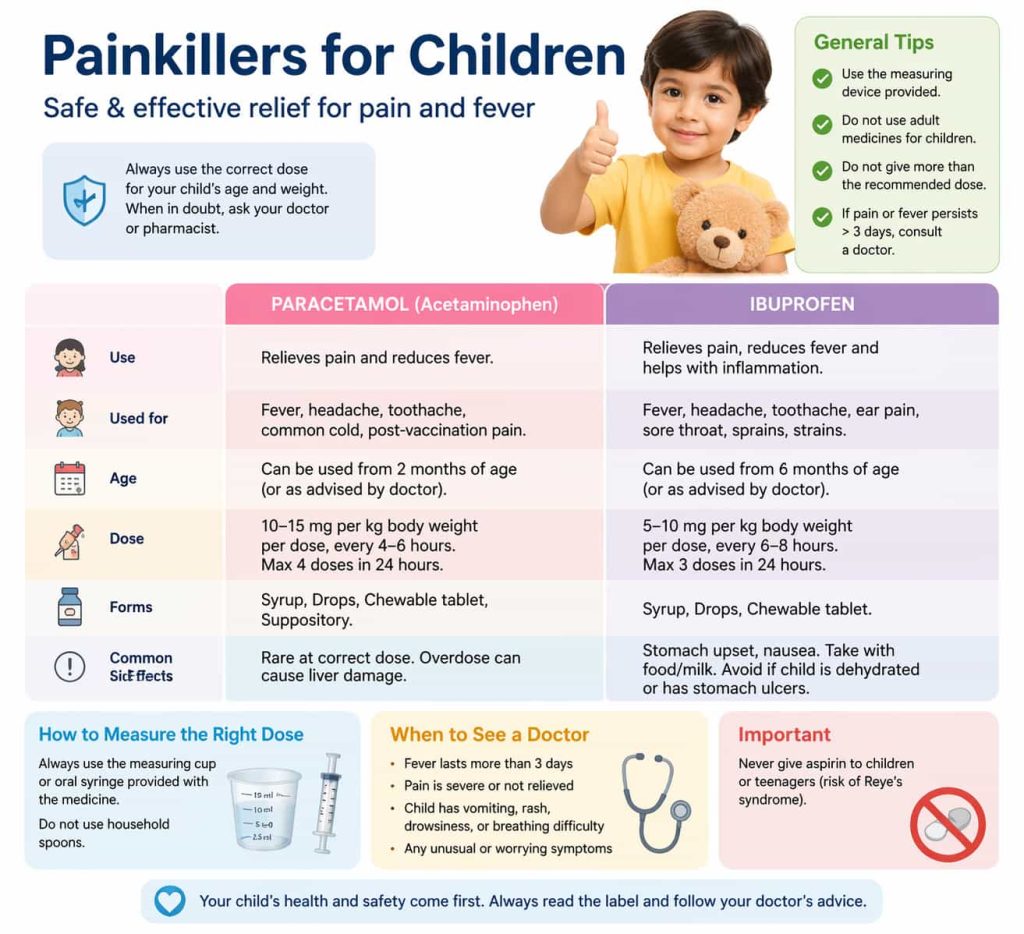
In South Africa, only two main over-the-counter (OTC) painkillers are widely recommended for children:
- Paracetamol (first-line treatment)
- Ibuprofen (second-line or stronger option)
These medicines are available in pharmacies, supermarkets, and clinics, usually in syrup, drops, or chewable tablet forms.
1. Paracetamol for Children

What is Paracetamol?
Paracetamol (also known as acetaminophen) is the most commonly used painkiller and fever reducer for children. It is considered the safest option when used correctly.
Why Paracetamol is First Choice
- Safe for most age groups, including infants (with medical advice)
- Effective for mild to moderate pain
- Minimal stomach irritation compared to other painkillers
- Widely available and affordable in South Africa
Uses of Paracetamol
Paracetamol is used to treat:
- Fever
- Headaches
- Toothache
- Teething pain
- Earache
- Sore throat
- General body pain
Recommended Dosage
The correct dosage depends on the child’s weight, not just age.
- 10–15 mg per kg body weight
- Given every 4 to 6 hours
- Maximum: 4 doses in 24 hours
Example:
If a child weighs 10 kg:
- Dose = 100–150 mg per dose
Forms Available in South Africa
- Infant drops
- Syrup/suspension
- Chewable tablets (for older children)
Popular options include Panado Paediatric Syrup and Calpol.
Safety Tips
- Always use a measuring syringe or spoon
- Never exceed the recommended dose
- Avoid combining with other medicines containing paracetamol
- Overdose can cause serious liver damage
2. Ibuprofen for Children


What is Ibuprofen?
Ibuprofen is a non-steroidal anti-inflammatory drug (NSAID) that reduces pain, fever, and inflammation.
When to Use Ibuprofen
Ibuprofen is often used when:
- Paracetamol is not effective
- Pain involves inflammation (e.g., injury or swelling)
- Fever is persistent
Benefits of Ibuprofen
- Stronger pain relief than paracetamol in some cases
- Reduces inflammation and swelling
- Longer-lasting effect
Recommended Dosage
- 5–10 mg per kg body weight
- Every 6 to 8 hours
- Maximum: 3–4 doses per day
Age Restrictions
- Generally safe for children older than 3–6 months
- For younger infants, consult a doctor
Forms Available
- Syrup/suspension
- Chewable tablets
Common brand: Nurofen for Children.
Safety Tips
- Give after food to prevent stomach irritation
- Avoid if the child is dehydrated or vomiting
- Do not use in children with certain kidney or stomach conditions
- Do not combine with other NSAIDs
Medicines to Avoid in Children
Aspirin (Strictly Avoid)
Aspirin should never be given to children.
Why is Aspirin Dangerous?
It is linked to a rare but serious condition called Reye’s syndrome, which can cause:
- Brain swelling
- Liver damage
- Death in severe cases
Choosing the Right Painkiller
Choosing between paracetamol and ibuprofen depends on the child’s condition.
When to Use Paracetamol
- Mild fever
- Headache
- Teething pain
- General discomfort
When to Use Ibuprofen
- Swelling or inflammation
- Muscle injury
- Severe pain
- Fever not responding to paracetamol
Can They Be Used Together?
In some cases, doctors may recommend alternating paracetamol and ibuprofen. However:
- This should only be done under medical guidance
- Incorrect use increases risk of dosing errors
Dosage Guide Table
| Weight (kg) | Paracetamol Dose | Ibuprofen Dose |
|---|---|---|
| 5 kg | 50–75 mg | Not recommended |
| 10 kg | 100–150 mg | 50–100 mg |
| 15 kg | 150–225 mg | 75–150 mg |
| 20 kg | 200–300 mg | 100–200 mg |
| 25 kg | 250–375 mg | 125–250 mg |
Always confirm dosing with a healthcare professional.
How to Give Medicine Safely
1. Use Correct Measuring Tools
Avoid kitchen spoons. Use:
- Oral syringes
- Measuring cups
2. Check Labels Carefully
Look for:
- Strength (mg per ml)
- Expiry date
- Active ingredients
3. Stick to the Schedule
- Do not give doses too close together
- Keep track of time and amount
4. Store Medicines Safely
- Keep out of reach of children
- Store at recommended temperature
Common Mistakes Parents Make
- Guessing doses instead of using weight
- Using household spoons
- Giving adult medication to children
- Combining multiple medicines unknowingly
- Overdosing during high fever
Avoiding these mistakes can prevent serious health risks.
Side Effects to Watch For
Paracetamol
- Generally safe
- Overdose can cause liver damage
Ibuprofen
- Stomach pain
- Nausea
- Risk of kidney issues if dehydrated
Seek medical help if you notice:
- Vomiting
- Rash
- Breathing difficulty
- Unusual sleepiness
When to See a Doctor
You should consult a doctor if:
- Baby is under 3 months with fever
- Fever lasts more than 2–3 days
- Child has severe pain
- Symptoms worsen
- Child is not eating or drinking
- Signs of dehydration appear
Special Considerations in South Africa
Access to Medicines
Painkillers like paracetamol and ibuprofen are widely available:
- Pharmacies
- Clinics
- Supermarkets
Public Healthcare Advice
South African health guidelines recommend:
- Paracetamol as first-line treatment
- Careful dosing based on weight
- Avoid unnecessary medication
Natural Alternatives for Mild Pain
Sometimes, medication may not be necessary. You can try:
- Lukewarm sponge bath for fever
- Hydration (fluids)
- Rest and comfort
- Cold compress for injuries
- Teething rings for babies
These methods can support recovery alongside medication.
Pain Management for Different Age Groups
Infants (0–12 months)
- Use paracetamol with doctor guidance
- Avoid ibuprofen under 3–6 months
Toddlers (1–3 years)
- Both medicines may be used carefully
- Teething pain is common
Children (4–12 years)
- Wider range of dosage options
- Can use chewable tablets
Importance of Weight-Based Dosing
Weight-based dosing ensures:
- Effective pain relief
- Reduced risk of overdose
- Safer treatment
Always weigh your child or use recent weight records.
Frequently Asked Questions
Can I give painkillers on an empty stomach?
- Paracetamol: Yes
- Ibuprofen: No (give with food)
How long do they take to work?
- Usually 30–60 minutes
Can I wake a child for medicine?
- Only if necessary (e.g., high fever)
What if a dose is missed?
- Give when remembered, but do not double dose
Final Thoughts
Painkillers for children in South Africa are safe and effective when used correctly. The key points every parent should remember:
- Paracetamol is the first choice
- Ibuprofen is useful for stronger or inflammatory pain
- Always use weight-based dosing
- Avoid aspirin completely
- Consult a doctor when in doubt
By understanding how these medicines work and following proper guidelines, parents can confidently manage their child’s pain and fever while ensuring safety.

## 🩺 RxZest Medical Team
The **RxZest Medical Team** is dedicated to providing accurate, reliable, and easy-to-understand health information. Our team includes healthcare writers, medical researchers, and pharmacology specialists who simplify complex medical topics into clear, practical guidance.
All content is based on trusted medical sources and carefully reviewed for accuracy and safety. We focus on medicine-related topics such as uses, dosage, side effects, and precautions, ensuring information is helpful and up to date.
Our goal is to make health information accessible to everyone. Content is for educational purposes only and does not replace professional medical advice.